Why Your Periods Are Getting Heavier in Your 40s
You're standing in the bathroom, staring at what looks like a crime scene, wondering if this is actually normal — or if something has gone seriously wrong. You used to breeze through your period in four days with regular tampons. Now you're on day six, doubling up protection, and setting alarms at night just to avoid accidents. If this sounds familiar, you're not alone, and no, you're not imagining it. Heavy periods in your 40s perimenopause is one of the most common — and least talked about — experiences women go through during this hormonal transition.
In this article, you'll understand exactly why your body is doing this, what's actually happening hormonally, and what practical steps you can take to feel more in control. Because flooding through a super tampon in two hours shouldn't just be something you white-knuckle through every month.
What's Actually Happening to Your Hormones in Your 40s
Here's the thing: your body doesn't just flip a switch from "normal cycles" to "menopause." There's a whole transitional phase — often lasting anywhere from a few years to over a decade — called perimenopause. And it starts earlier than most women expect, often in the early-to-mid 40s.
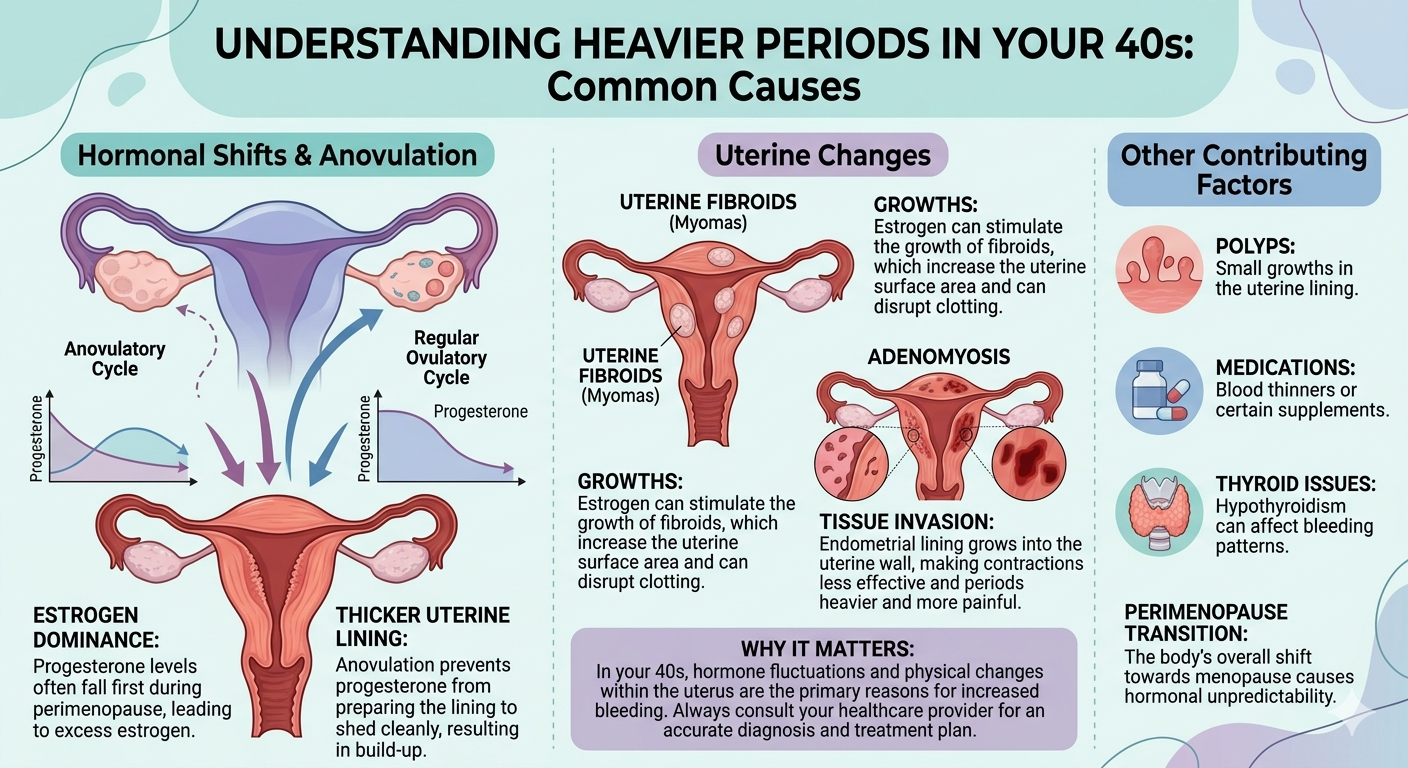
During this time, your ovaries start producing less progesterone. Estrogen, on the other hand, doesn't drop steadily — it fluctuates wildly. Some months it surges. Some months it crashes. This hormonal seesaw is the root cause of so many perimenopausal symptoms, including those suddenly heavier, longer, more unpredictable periods.
The Estrogen-Progesterone Imbalance
Progesterone is the hormone that tells your uterine lining to stop thickening and prepare to shed in an orderly, controlled way. When progesterone drops — which happens when you have cycles where you don't ovulate — estrogen goes relatively unopposed. The uterine lining keeps building and building. Then when your period finally comes, there's a lot more to shed.
That's why you might go six weeks between periods and then bleed heavily for ten days. Or have two periods in one month, one light and one absolutely brutal. This isn't a sign that something is broken. It's a sign that your reproductive hormones are shifting — which is completely expected in your 40s, even if nobody warned you it would feel like this.
Why Anovulatory Cycles Make Things Worse
An anovulatory cycle is one where you don't release an egg. You still get a period, but because ovulation didn't happen, your body produced little to no progesterone that month. These cycles become more frequent in perimenopause, and they're a big reason why periods can become so erratic and heavy.
The frustrating part? You might still have regular-ish cycles on the calendar. So on the outside, things look "normal," but inside, the hormonal picture is very different from what it was in your 30s.
Heavy Periods in Your 40s and Perimenopause: What "Heavy" Actually Means
It's worth getting clear on this, because many women have been told their whole lives that painful, heavy periods are just part of being a woman. They're not — and there's a clinical threshold worth knowing about.
Medically speaking, heavy menstrual bleeding (also called menorrhagia) is defined as losing more than 80ml of blood per cycle. In practical terms, that translates to:
- Soaking through a pad or tampon every hour or two for several consecutive hours
- Needing to double up on protection (tampon plus pad at the same time)
- Passing clots larger than a 50-cent coin
- Bleeding for more than seven days
- Feeling exhausted, dizzy, or breathless during your period — signs that blood loss may be affecting your iron levels
If you're ticking more than one of these boxes regularly, that's worth taking seriously. It doesn't mean something is catastrophically wrong, but it does mean your body is sending you a clear signal that needs attention — not just more super-absorbency tampons.
Other Conditions That Can Make Things Heavier (Not Just Perimenopause)
Perimenopause is often the main driver of heavy periods in your 40s, but it's not always the only factor. A few other conditions can layer on top of hormonal changes and make bleeding significantly worse.
Fibroids
Uterine fibroids are non-cancerous growths that develop in or around the uterus. They're incredibly common — many women have them without knowing — and they tend to grow in response to estrogen. So during perimenopause, when estrogen can surge unpredictably, fibroids can become more symptomatic. They're one of the most frequent reasons why periods become heavier and longer in this decade of life.
Adenomyosis
This is a condition where the tissue that normally lines the uterus starts growing into the muscular wall of the uterus itself. It causes heavy, crampy, prolonged periods and is frequently underdiagnosed. Many women reach their 40s having had adenomyosis for years without knowing it — and perimenopause can amplify the symptoms significantly.
Thyroid Issues
Your thyroid plays a surprisingly big role in regulating your menstrual cycle. An underactive thyroid (hypothyroidism) can contribute to heavy, irregular periods. Thyroid dysfunction also becomes more common in women over 40, so if you're dealing with heavy periods alongside fatigue, cold sensitivity, or brain fog, it's worth getting your thyroid checked.
The takeaway here is that if your periods have become dramatically heavier, a conversation with your doctor — including some basic blood work — is a smart first step. You want to know what you're actually dealing with before deciding on a path forward.
The Physical and Emotional Toll Nobody Really Talks About
Let's be honest about what heavy periods in perimenopause actually do to your day-to-day life. This isn't just a physical inconvenience.
When you're planning your work calendar around your cycle, skipping social events because you're terrified of leaking, or lying awake at 3am worrying about ruining your sheets — that's a quality-of-life issue. Full stop.
Many women we hear from at orozna.com describe a creeping sense of loss of control. You used to know your body. You had a rhythm. Now your cycle feels like a stranger, and every month brings a new version of chaos. That's exhausting in a way that's hard to explain to someone who hasn't experienced it.
There's also the physical drain of iron loss. Heavy periods that go on for years without intervention can lead to iron-deficiency anemia — which means fatigue, poor concentration, low mood, and feeling cold all the time. These symptoms get blamed on "just being tired" or "stress," when the actual root cause is chronic blood loss. If you've been feeling persistently drained, an iron panel alongside your regular blood work is well worth asking for.
What You Can Actually Do About It
The good news: you have options. A lot of women feel like they just have to endure this phase, but that's genuinely not true. Managing heavy perimenopausal periods is possible, and there are multiple approaches depending on your situation, your health history, and what feels right for you.
Talk to Your Doctor About Medical Options
There are several evidence-based medical interventions for heavy periods, and they're worth knowing about:
- Hormonal options like the Mirena IUD, combined oral contraceptives, or progesterone-only therapy can significantly reduce bleeding — and some have the added benefit of helping other perimenopausal symptoms
- Tranexamic acid is a non-hormonal medication you can take during your period that reduces blood loss — it doesn't affect your hormones at all
- NSAIDs like ibuprofen, taken regularly during your period (not just when pain hits), can reduce both cramping and blood flow
- For women with fibroids or structural issues, procedures like endometrial ablation or fibroid treatment may be worth discussing
Don't walk into that appointment downplaying your symptoms. Describe exactly what's happening — how many products you're going through, how many days it lasts, whether it's affecting your sleep or daily functioning. Doctors can only work with the information you give them.
Nutritional and Lifestyle Support
Alongside any medical approach, nutrition matters more than many women realise during this phase. If you're losing significant blood every month, you need to be proactive about iron intake — think red meat, legumes, leafy greens, and pairing iron-rich foods with vitamin C to help absorption. Avoiding tea and coffee around mealtimes can also help, since tannins inhibit iron absorption.
Some women find that reducing alcohol and processed sugar helps with hormonal balance and reduces the intensity of symptoms — not a magic fix, but a supporting factor. And stress management isn't just a wellness cliché here; chronic stress affects cortisol, which in turn can disrupt the hormonal balance you're already trying to stabilise.
Understanding Your Cycle So You Can Plan Around It
One of the most practical things you can do is stop being caught off guard. Tracking your cycle — even roughly — gives you back a sense of agency. You'll start to notice patterns, even if they're irregular ones. You'll know which days are typically your heaviest and can plan accordingly, whether that means clearing your schedule, having the right supplies on hand, or just mentally preparing.
If you're looking for structured guidance on understanding what your body is going through and how to support yourself through perimenopause, orozna.com's digital resources for women in perimenopause and menopause are designed to give you exactly that — practical, women-specific information that doesn't talk down to you or treat this phase like a medical emergency to be managed rather than understood.
When to See a Doctor Without Delay
Most heavy perimenopausal periods, while disruptive, are not dangerous. But there are some situations where you should seek medical attention promptly rather than waiting for your next scheduled appointment.
Get checked out sooner if you're soaking through more than a pad an hour for two or more consecutive hours, passing very large clots consistently, bleeding between periods in a way that feels different from spotting, experiencing significant pelvic pain that's new or getting worse, or feeling faint or short of breath. These can be signs that something beyond hormonal fluctuation is going on and needs to be assessed.
You know your body. If something feels off beyond "just perimenopause," trust that instinct and get it checked.
You Deserve to Actually Feel Well — Not Just Cope
Here's something worth sitting with: there's a difference between managing symptoms and actually thriving through this transition. For too long, women have been handed a handful of leaflets and told to come back when they hit menopause. But perimenopause — this whole in-between stretch — can last years, and you deserve real support during it, not just a pat on the back and a prescription to white-knuckle through.
Heavy periods in your 40s during perimenopause are common, yes. But common doesn't mean you have to just put up with it. Understanding what's driving the change, ruling out compounding conditions, getting the right medical support, and giving your body the nutritional backup it needs — that's a genuine plan, not just hopeful thinking.
Your 40s are not a slow decline. They're a transition — one that a lot of women, once they understand what's happening and get the right tools, actually navigate really well. The more informed you are going in, the better positioned you are to come out the other side feeling like yourself again. If you want a solid starting point for understanding your body through perimenopause and building a plan that actually fits your life, explore orozna.com's resources for women navigating perimenopause and menopause — it's the kind of support we wish more women had access to from day one.