The Best Diet Changes for Perimenopause in Your 40s
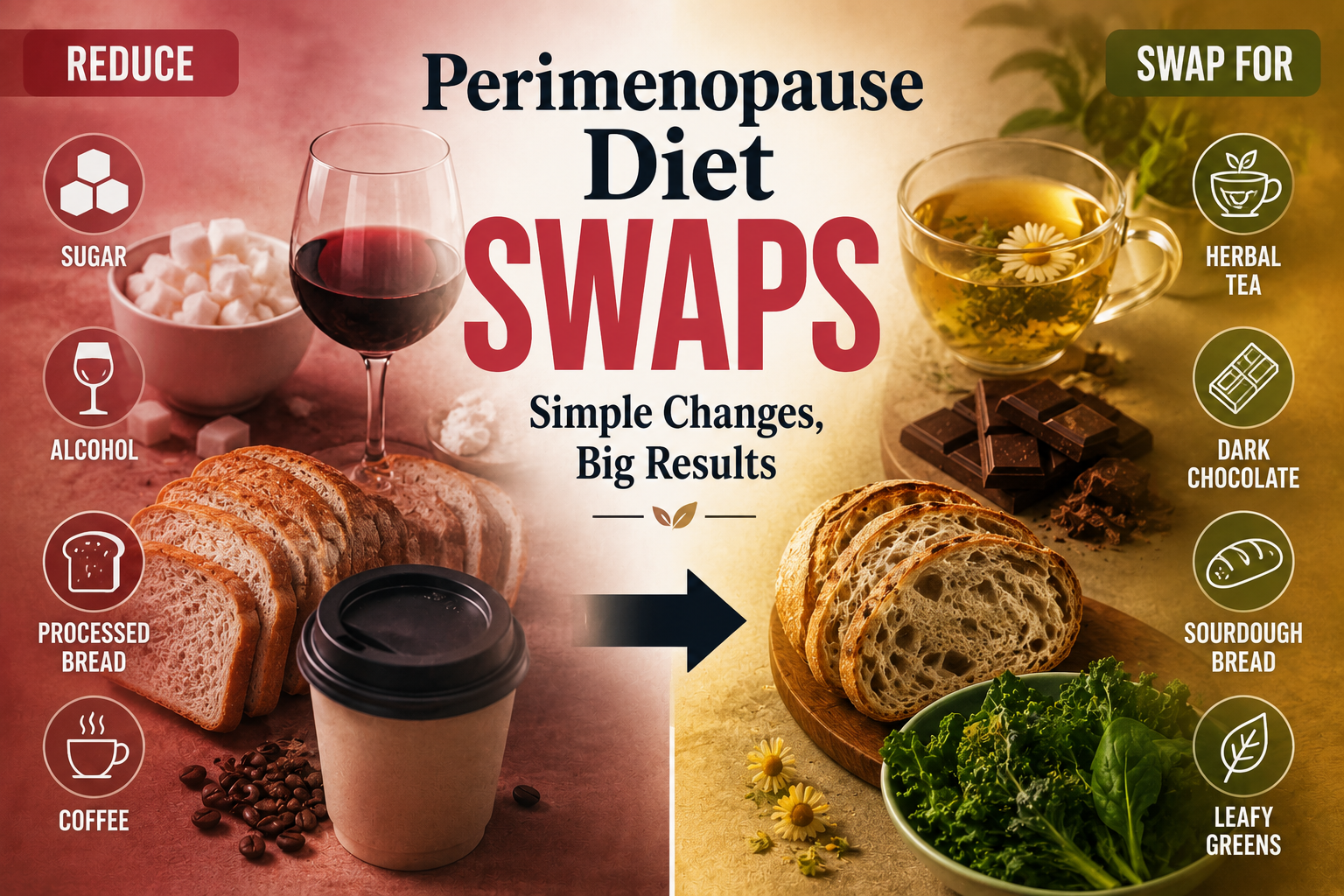
You're eating the same way you have for years — maybe even pretty healthily — but suddenly you're gaining weight around your middle, feeling bloated after meals that never used to bother you, and craving sugar at 3pm like clockwork. Sound familiar? If you're in your 40s and noticing these changes, you're not imagining things, and it's almost certainly not a willpower problem. The best diet for perimenopause in your 40s looks genuinely different from what worked for you at 30 — because your hormones, metabolism, and nutritional needs have shifted in ways that most mainstream advice completely ignores.
In this article, you'll learn exactly which dietary changes make the biggest difference during perimenopause, why your body responds differently to food now, and how to make practical adjustments that actually fit into real life. No extreme restriction, no confusing protocols — just clear, evidence-based changes that work with your changing hormones rather than against them.
Why Your Body Responds to Food Differently in Perimenopause
Here's something nobody tells you clearly enough: perimenopause isn't just about hot flushes. It's a full hormonal transition that starts — for most women — somewhere in their early-to-mid 40s, often years before periods actually stop. Oestrogen and progesterone begin fluctuating wildly, and those hormones influence almost everything, including how your body processes carbohydrates, stores fat, and regulates hunger.
Insulin sensitivity tends to decrease during this phase. That means your body doesn't manage blood sugar as efficiently as it once did, which is why that afternoon sugar crash hits harder now, and why the pasta dish that never caused issues before suddenly seems to leave you feeling sluggish and puffy. This isn't a character flaw — it's physiology.
Cortisol (your stress hormone) also becomes more of a player. When oestrogen drops, your body becomes more reactive to stress, and cortisol spikes can trigger fat storage around the abdomen. This is why blood sugar regulation becomes the single most important dietary principle for women in their 40s navigating perimenopause.
Understanding this is the starting point for everything else. Once you get it, the food changes you need to make start making a lot more sense.
The Best Diet for Perimenopause in Your 40s Prioritises Protein — Seriously
If there's one change that moves the needle most noticeably for perimenopausal women, it's eating more protein. Most women in their 40s are significantly under-eating it — even those who think they're eating well.
Here's why it matters so much right now. From our mid-30s onwards, we start losing muscle mass — a process called sarcopenia — and declining oestrogen accelerates it. Muscle tissue is metabolically active, meaning it burns calories even at rest. Less muscle means a slower metabolism, more fat accumulation, and less stable energy. Getting adequate protein helps preserve and rebuild that muscle, especially when combined with any kind of resistance training.
How Much Protein Do You Actually Need?
The old recommended daily amounts were set for sedentary adults trying to avoid deficiency — not for women in hormonal transition trying to maintain muscle and metabolic health. A more useful target for women in perimenopause is around 25–35 grams of protein per meal, rather than thinking about a daily total that's easy to hit mostly at dinner.
Spreading protein across meals also helps with blood sugar stability throughout the day — which circles back to that insulin sensitivity issue we mentioned.
Practical Protein Sources That Work in Real Life
- Eggs (two eggs give you around 12g — pair with Greek yoghurt for breakfast and you're at 25g before 9am)
- Chicken, turkey, and oily fish like salmon or sardines
- Greek yoghurt, cottage cheese, and kefir
- Legumes like lentils and chickpeas (also great for fibre — more on that shortly)
- Tofu and tempeh if you prefer plant-forward eating
Think of protein as the anchor of every meal. Build around it, rather than treating it as an afterthought.
Rethinking Carbohydrates (Without Demonising Them)
You don't need to go low-carb. Full stop. But the type and timing of carbohydrates matters more than it did in your 30s, and making some adjustments here can have a noticeable impact on energy, mood, and that stubborn mid-section weight.
The goal is to move away from refined, quickly digested carbohydrates — white bread, sugary snacks, processed cereals — and towards slower-digesting options that don't spike blood sugar sharply. This isn't about restriction; it's about choosing carbohydrates that keep you fuller, more energised, and more hormonally stable.
Swap, Don't Strip
Rather than cutting carbs out, think in swaps. White rice becomes a mix of white and brown, or cauliflower rice alongside. Regular pasta becomes lentil pasta or a smaller portion paired with more vegetables and protein. Breakfast cereal becomes overnight oats with seeds and berries. These aren't dramatic changes — they're small pivots that compound over time.
Eating carbohydrates alongside protein and healthy fats also slows their digestion and blunts the blood sugar response. So a banana on its own at 3pm is a different experience for your body than a banana with almond butter and a handful of walnuts.
Fibre Is Your Best Friend Right Now
Fibre deserves its own mention because it's doing multiple jobs during perimenopause. It feeds the gut microbiome (which influences oestrogen metabolism), supports bowel regularity (often disrupted during hormonal shifts), and keeps you fuller for longer. Most women are eating far less than the recommended 25–30g per day.
Vegetables, legumes, whole grains, flaxseeds, and fruit with the skin on are all excellent sources. Aim to add rather than restrict — a tablespoon of flaxseed into your morning yoghurt, an extra handful of leafy greens at lunch, a side of roasted veg with dinner.
The Nutrients Perimenopausal Women Are Most Often Missing
Even women eating a broadly healthy diet often have gaps in specific nutrients that become more critical during perimenopause. Getting these right through food first — and supplementing where needed — can make a real difference to symptoms and long-term health.
Calcium and Vitamin D
Oestrogen plays a key role in maintaining bone density, so as it declines, bone loss accelerates. This is not a distant concern — it begins in perimenopause, not after menopause. Calcium-rich foods (dairy, fortified plant milks, leafy greens, sardines with bones) and adequate vitamin D (sunlight, oily fish, eggs, supplementation in winter months) are non-negotiable at this life stage.
Magnesium
Magnesium is involved in over 300 biochemical reactions in the body and is particularly relevant for perimenopausal women because it supports sleep quality, reduces anxiety, eases muscle tension, and helps regulate blood sugar. Dark chocolate, pumpkin seeds, almonds, spinach, and avocado are all solid dietary sources. Many women find a magnesium glycinate supplement before bed genuinely helpful for sleep.
Omega-3 Fatty Acids
Omega-3s support brain health, reduce inflammation, help with mood regulation, and may ease joint aches — all of which become more relevant in your 40s. Oily fish twice a week is the easiest food-based way to get there. If you don't eat fish, algae-based omega-3 supplements are a good alternative.
If you're finding it overwhelming to know exactly where to start with all of this, resources like those available at orozna.com's digital guides for perimenopausal women can help you map it out in a structured, practical way without the information overload.
Phytoestrogens, Gut Health, and Alcohol: The Three Often-Overlooked Pieces
Phytoestrogens
Phytoestrogens are plant compounds that have a mild oestrogen-like effect in the body. They're found in soy products, flaxseeds, chickpeas, lentils, and sesame seeds. While they're not a replacement for HRT and won't dramatically alter your hormone levels, including them regularly as part of a varied diet may help with symptom management for some women, particularly hot flushes.
Flaxseeds are especially worth a mention — they're also a great fibre source and are incredibly easy to add to smoothies, yoghurt, or porridge.
Gut Health
The gut microbiome influences how your body metabolises and recycles oestrogen. A healthy, diverse microbiome supports better hormonal balance. Fermented foods — live yoghurt, kefir, kimchi, sauerkraut, miso — introduce beneficial bacteria. A high-fibre diet feeds them. Both matter.
If you're experiencing more bloating, gas, or digestive unpredictability than usual, this is common in perimenopause and often responds well to improving gut health over a few weeks.
Alcohol
This one isn't comfortable to hear, but it's honest: alcohol becomes harder to tolerate in perimenopause. It disrupts sleep architecture (even if it helps you fall asleep initially), worsens hot flushes, elevates cortisol, and contributes to blood sugar instability. You don't have to give it up entirely, but noticing your own threshold — and being honest about it — is worth doing. Many women in their 40s find that even reducing from several nights a week to one or two makes a noticeable difference to how they feel.
Building Eating Habits That Actually Stick
None of this works if it's too complicated to maintain. The women who feel the most significant difference from dietary changes aren't following rigid meal plans — they've built a handful of consistent habits that they do most of the time, with flexibility the rest of the time.
Take Sarah, for example — someone who came to the orozna.com community feeling exhausted, foggy, and frustrated that her usual healthy habits weren't working anymore. The shift for her wasn't a total diet overhaul. It was anchoring her mornings with a protein-rich breakfast (Greek yoghurt, berries, seeds, a boiled egg), batch-cooking legumes twice a week, and cutting her nightly glass of wine down to weekends only. Within six weeks, her sleep was better, the afternoon energy crash had eased, and she'd stopped craving sugar the way she had been.
Small, consistent changes really do compound. You don't need to eat perfectly — you need to eat strategically, most of the time.
A Simple Framework for Each Meal
- Protein first: at least 25g from a whole food source
- Plenty of non-starchy vegetables or salad
- A moderate portion of slow-digesting carbohydrates
- A source of healthy fat — olive oil, avocado, nuts, oily fish
- Colour and variety wherever possible (this supports gut microbiome diversity)
That's it. You don't need a complicated formula. Just those five considerations, applied consistently, will take you a long way.
Your 40s Are Actually a Really Good Time to Get This Right
Here's a perspective shift worth sitting with: perimenopause isn't something going wrong with your body. It's a transition, and the dietary habits you build now don't just ease your symptoms — they set you up for long-term health in your 50s, 60s, and beyond. Bone density, cardiovascular health, metabolic function, cognitive health — what you eat in your 40s has a real bearing on all of them.
The women who come through perimenopause feeling their best are the ones who stopped trying to eat like they did at 28 and started working with the body they have now. That's not settling — that's smart. Your nutritional needs have evolved, and your diet can evolve with them.
Making these changes doesn't require perfection, a restrictive plan, or hours of meal prep. It requires understanding what your body actually needs right now — and building habits around that. If you want a structured, step-by-step approach to putting all of this into practice, orozna.com's digital resources for women in perimenopause and menopause are designed exactly for this stage of life and can help you turn the right information into real, lasting change.