Perimenopause Hot Flashes: When They Start and How to Manage Them
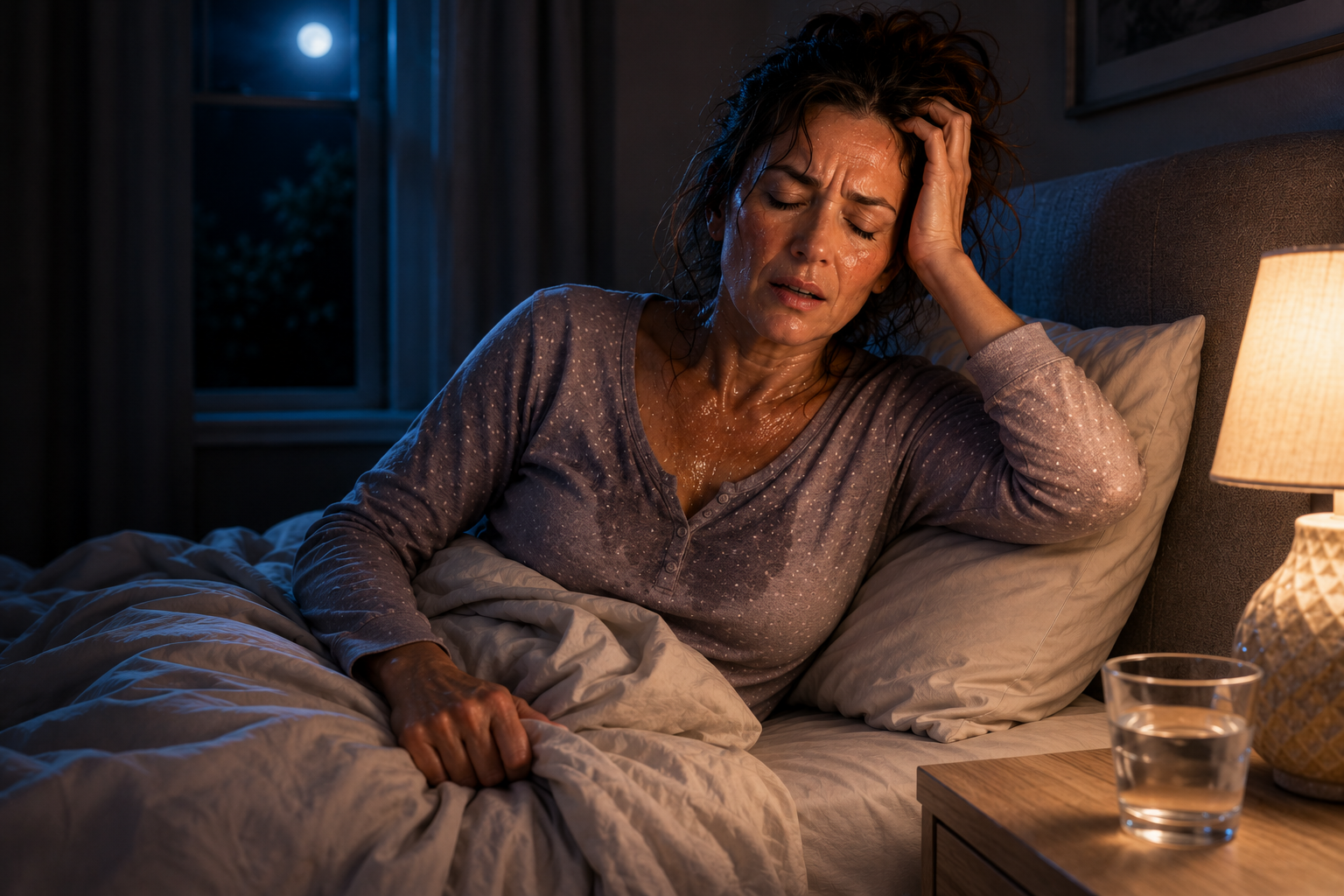
It's 2 a.m. and you're wide awake, kicking off the covers, heart racing, sweat soaking through your pajamas — and you're pretty sure you haven't run a marathon recently. Sound familiar? Hot flashes are one of the most talked-about symptoms of perimenopause, but knowing that doesn't make them any less disorienting when they show up uninvited. If you've been searching for real answers about perimenopause hot flashes management, you're in the right place.
In this article, you'll learn exactly when hot flashes typically start during perimenopause, why they happen, what makes them worse, and — most importantly — what actually helps. We're skipping the vague advice and getting into the practical stuff that women in their 40s and 50s genuinely need to hear.
When Do Hot Flashes Actually Start in Perimenopause?
Here's something that surprises a lot of women: hot flashes can start years before your period actually stops. Perimenopause — the transitional phase leading up to menopause — can begin anywhere from your late 30s to your mid-50s. For most women, it kicks in somewhere in the mid-40s, but there's a wide range that's completely normal.
Hot flashes often appear in the early-to-mid stages of perimenopause, when your estrogen levels start fluctuating unpredictably. It's not a smooth, gradual decline. It's more like a rollercoaster where the highs and lows become increasingly erratic over time. That instability is what triggers your body's internal thermostat to misfire.
Some women get their first hot flash while they're still having regular periods. Others don't experience them until their cycles are already irregular. There's no single timeline, and comparing yourself to a friend's experience can leave you more confused than when you started.
What Counts as a Hot Flash?
A hot flash is a sudden, intense wave of heat — usually felt most strongly in the face, neck, and chest. It can last anywhere from 30 seconds to several minutes. Some women sweat heavily. Others get flushed. Some feel a racing heartbeat. A few feel chilly immediately afterward, which is your body overcorrecting.
Night sweats are essentially hot flashes that happen while you're sleeping. They're the same physiological event — just with the added bonus of wrecked sleep and damp sheets.
Why Your Body Does This (The Short, Honest Explanation)
Your hypothalamus — the part of your brain that regulates body temperature — is highly sensitive to estrogen. When estrogen levels drop or fluctuate, your hypothalamus can misread your core temperature and essentially panic, triggering a heat-release response even when you're not actually overheated.
This isn't a malfunction. It's your body doing exactly what it's designed to do — it's just responding to the wrong signal. That distinction matters because it shifts how you approach managing hot flashes. You're not broken. You're in transition.
The frequency and severity vary enormously from person to person. Some women have a few mild episodes a week. Others are dealing with ten or more hot flashes a day that disrupt work, sleep, and basic quality of life. Both experiences are valid, and both deserve real solutions.
The Everyday Triggers That Make Hot Flashes Worse
Even if you can't eliminate hot flashes entirely, you can often reduce how frequently they happen and how intense they feel by identifying and managing your triggers. This is one of the most underrated parts of perimenopause hot flashes management — and it starts with paying attention.
Common triggers include:
- Alcohol — especially red wine, which dilates blood vessels and mimics the flushing response
- Caffeine — particularly in the afternoon or evening when your system is already ramping down
- Spicy foods — capsaicin activates the same heat-sensing receptors in your body
- Hot drinks — sometimes the temperature itself is the issue, not the content
- Stress and anxiety — cortisol and adrenaline can trigger or intensify episodes
- Tight or synthetic clothing — anything that traps body heat
- Warm or stuffy rooms — poor ventilation creates the perfect storm
A lot of women find it helpful to keep a simple trigger journal for a couple of weeks. Nothing fancy — just a note on your phone when a hot flash hits, what you were doing, eating, or feeling beforehand. Patterns tend to emerge faster than you'd expect.
The Stress Connection Nobody Talks About Enough
Stress deserves its own mention here because it's both a trigger and a consequence. Chronic stress raises cortisol, which can further disrupt hormonal balance. Hot flashes cause sleep disruption. Sleep deprivation increases stress. It's a cycle that can feel relentless if you don't actively interrupt it.
This is why relaxation practices — even simple ones like slow breathing or a short evening wind-down routine — can have a real, measurable impact on hot flash frequency. It's not just "self-care." It's physiologically relevant.
Practical Strategies That Actually Help With Perimenopause Hot Flashes
Let's get into what works. There's a lot of noise out there, so we're focusing on approaches that have meaningful real-world impact for women going through this phase.
Dress and Sleep in Layers
This sounds almost embarrassingly simple, but it works. Wearing lightweight, moisture-wicking fabrics during the day — and keeping your bedroom cool at night with breathable bedding — can significantly reduce the impact of both daytime hot flashes and night sweats. Some women swear by cooling mattress toppers. Others keep a small fan on their nightstand. Whatever helps you manage your body temperature environment matters.
Paced Breathing During a Hot Flash
Slow, deliberate breathing — inhaling for four counts, exhaling for four to six counts — activates your parasympathetic nervous system and can reduce the intensity and duration of a hot flash when you're in the middle of one. It's one of the few in-the-moment tools you always have access to, no matter where you are.
Movement and Exercise
Regular moderate exercise — especially strength training and walking — supports hormonal regulation and reduces overall hot flash frequency over time. The key phrase there is "over time." Exercise isn't an immediate fix, but women who build consistent movement into their weeks generally report fewer and milder episodes than those who don't.
Vigorous exercise can actually trigger hot flashes temporarily in some women, so pay attention to your own response. For most people, moderate intensity is the sweet spot.
Look at Your Diet More Closely
Beyond avoiding obvious triggers, some dietary shifts can support your body during this transition. Foods rich in phytoestrogens — like flaxseeds, edamame, and lentils — contain plant compounds that interact weakly with estrogen receptors. The research on their effectiveness is mixed, but many women notice a positive difference when they make these a regular part of their diet.
Staying well-hydrated also helps. Dehydration makes hot flashes feel more intense and longer-lasting. It sounds too simple to be true, but your water intake genuinely matters here.
Supplements Worth Considering
Certain supplements have a decent evidence base for reducing hot flash frequency and severity. Black cohosh is probably the most researched. Magnesium is often helpful for sleep quality, which indirectly reduces how hard night sweats hit you. Evening primrose oil is popular, though the evidence is less consistent.
Always check with your healthcare provider before starting supplements, especially if you're on any medications. Some herbal supplements interact with common prescriptions in ways that aren't immediately obvious.
When to Have a Real Conversation With Your Doctor
If your hot flashes are frequent enough to disrupt your sleep, your work, or your daily life consistently, that's worth a proper conversation with a doctor — not just web searches and hoping for the best.
Hormone replacement therapy (HRT) is the most effective treatment for moderate to severe hot flashes, and it's been significantly reexamined in recent years. Many women who were previously told to avoid it are now finding that the risk-benefit calculation looks very different for them, depending on their health history. This isn't a conversation to have with Google — it's one to have with a doctor who knows your full picture.
Non-hormonal prescription options also exist for women who can't or prefer not to use HRT. These include certain antidepressants at low doses and a newer class of medications specifically approved for menopause-related hot flashes. You have more options than the internet might lead you to believe.
For women who want comprehensive, structured guidance on navigating all of this — the symptoms, the lifestyle changes, the emotional side, and the decisions about treatment — orozna.com's digital resources for women in perimenopause and menopause are designed specifically to give you that kind of organized, reliable support in a format you can revisit anytime.
The Emotional Weight of Hot Flashes (This Part Matters Too)
We'd be doing you a disservice if we only talked about the physical side. Hot flashes carry real emotional weight that often goes unacknowledged.
There's the embarrassment of turning bright red in a meeting. The frustration of being woken up at 3 a.m. again. The low-grade anxiety that builds when you can feel one coming and you can't do anything to stop it. The feeling that your body is somehow out of your control.
Those feelings are legitimate. And they're incredibly common among women in their 40s and 50s who are dealing with perimenopause symptoms that nobody adequately warned them about.
One woman we hear from often describes it as "finally understanding what's actually happening to me" as the turning point. Not finding a magic cure — just having clear information and a framework for understanding her own body. That clarity itself reduces anxiety, and reduced anxiety reduces hot flash frequency. It genuinely helps.
Part of effective perimenopause hot flashes management is recognizing that your mental and emotional health is part of the equation, not separate from it. Sleep, stress, mood, and physical symptoms are all interconnected during this phase. Addressing one genuinely affects the others.
Building a Management Plan That Fits Your Life
There's no single protocol that works for every woman. What helps your coworker might do nothing for you, and what's transformative for you might not be relevant to your sister's experience. The most effective approach is layered — combining lifestyle adjustments, targeted strategies for your specific triggers, and professional guidance where needed.
Start with the things you can control today: your sleep environment, your trigger awareness, your hydration, your movement habits. Notice what shifts. Then build from there with supplements, dietary changes, or medical conversations as needed.
The women who manage this phase best aren't the ones who find one perfect solution. They're the ones who stay curious about their own body, keep adjusting, and don't give up when something doesn't immediately work.
Perimenopause is a transition, not a permanent state. Your symptoms will evolve, and your management strategies should evolve with them. The more informed you are, the better equipped you'll be to make decisions that genuinely serve you — which is exactly why having good resources in your corner matters so much. If you're ready to build a more structured approach to managing your perimenopause symptoms, explore what orozna.com has available for women navigating this stage — it's built by people who understand exactly where you are right now.