The Perimenopause Timeline: What to Expect in Your 40s
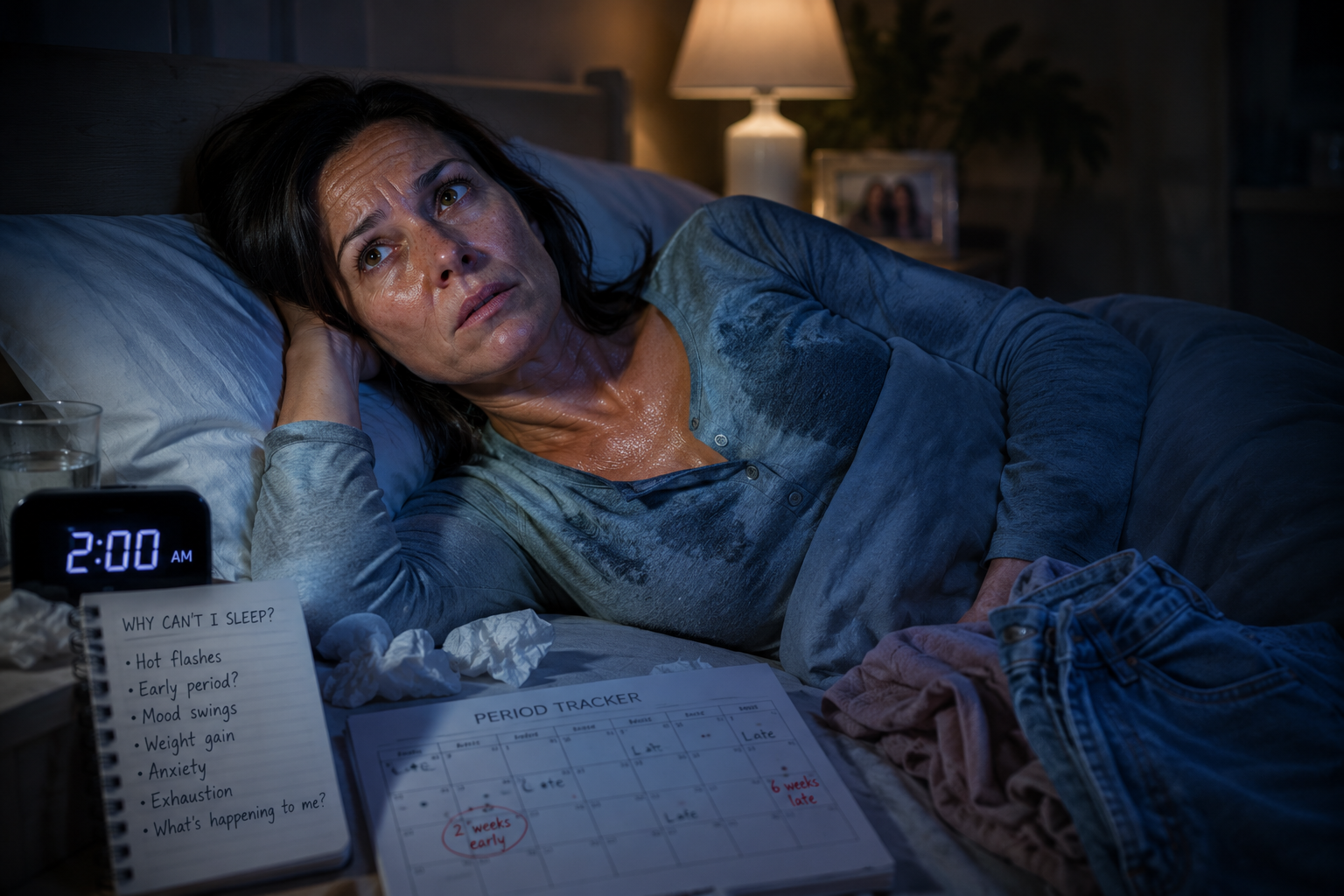
You're lying awake at 2am, sweating through your pajamas for the third night this week, wondering if you're somehow coming down with something — or losing your mind. Your period showed up two weeks early last month, then was almost six weeks late the month before that. You feel anxious for no clear reason, your jeans fit differently, and your usually reliable energy has quietly packed its bags and left. Sound familiar? If you're in your early-to-mid 40s and nodding along, there's a very good chance you're already somewhere on the perimenopause timeline stages 40s women talk about in hushed tones — or not at all, because nobody warned us this started so soon.
This article is going to walk you through exactly what happens during perimenopause, when it typically starts, what each phase actually feels like, and what you can do to make this transition work with your body instead of against it. No vague platitudes, no "just exercise more" advice — real, practical information you can actually use.
When Does Perimenopause Actually Begin? (It's Earlier Than You Think)
Most women are surprised to learn that perimenopause can begin anywhere from your late 30s to your mid-40s. The average age is around 47, but "average" covers a pretty wide range. If you're 41 and noticing changes, you're not imagining things and you're not early — you're right on time for your body's own schedule.
Perimenopause is technically the transition phase leading up to menopause, which is officially defined as 12 consecutive months without a period. That transition can last anywhere from 2 to 12 years. Yes, years. Which is why understanding the perimenopause timeline stages in your 40s matters so much — because this isn't a brief blip. It's a whole chapter of your life that deserves real attention.
Here's the thing most doctors don't spend enough time explaining: perimenopause isn't one single experience. It has distinct phases, and symptoms can shift dramatically from one phase to the next. What you feel at 42 can look completely different from what you'll experience at 48.
Early Perimenopause: When the First Signals Show Up
Early perimenopause is often the sneakiest stage. Your periods are still showing up — maybe even regularly — so it doesn't feel like anything is "happening" yet. But your hormones are already starting to fluctuate, and your body is sending you little postcards about it.
What's actually going on hormonally
Estrogen and progesterone don't just steadily decline during perimenopause. They fluctuate — sometimes wildly. Progesterone tends to drop first, which is why irregular cycles are often one of the first signs. You might ovulate less predictably, which throws off your whole cycle rhythm.
Estrogen can actually spike higher than normal during early perimenopause before it eventually starts declining. This is why some women feel more intense PMS symptoms, heavier periods, or breast tenderness during this phase — not less.
Early symptoms to watch for
- Cycles that are slightly shorter or longer than usual (even by a few days consistently)
- Heavier or lighter periods than you're used to
- Increased PMS — more irritability, bloating, or breast tenderness
- Mild sleep disruptions, especially in the week before your period
- A subtle shift in your mood or anxiety levels
- Changes in libido
Many women in this stage get told their labs are "normal" when they go to the doctor, because during early perimenopause, hormone levels can look perfectly fine on a single blood test. Perimenopause is a clinical diagnosis — meaning it's based on your symptoms and your age, not just your bloodwork. If your doctor dismisses you, it's worth seeking a second opinion from someone who specializes in menopause medicine.
Mid Perimenopause: When Things Get More Noticeable
This is the stage where most women go from "hmm, something feels off" to "okay, something is definitely happening." Cycles become more irregular — sometimes significantly so. You might skip a month, or two. Then your period comes back with a vengeance. The perimenopause timeline stages at this point in your 40s can feel genuinely disruptive.
The symptom picture shifts
Hot flashes and night sweats often become more prominent during mid perimenopause. For some women, they're mild and manageable. For others, night sweats are soaking sheets and hot flashes are interrupting meetings. There's no "normal" level of intensity here — your experience is valid whether it's occasional or constant.
Brain fog is another symptom that tends to pick up during this phase, and it catches a lot of women off guard. You reach for a word and it's just... gone. You walk into a room and forget why. You re-read the same paragraph three times. This is real, it's hormone-related, and it typically does improve — but knowing it's coming helps you not panic when it does.
What's happening to your cycle
The medical definition of mid perimenopause often includes cycles that vary by 7 or more days in length. So if you used to be a clockwork 28-day cycle person and now you're swinging between 21 days and 42 days, that's a meaningful shift. Your ovaries are producing less progesterone consistently, and estrogen levels are starting their longer-term decline.
This is also the stage where fertility, while declining, is still present — so if pregnancy isn't your goal, contraception still matters. Many women assume they're no longer fertile because their cycles are irregular. That's not a safe assumption.
Sleep, weight, and metabolic changes
Sleep disruption in mid perimenopause isn't just about night sweats. Estrogen and progesterone both play roles in sleep regulation, so as they fluctuate, your sleep architecture actually changes. You may sleep lighter, wake more easily, or find it harder to fall back asleep at 3am.
Weight changes — particularly around the midsection — also tend to become more noticeable here. This isn't purely about calorie intake or lack of exercise. Estrogen helps regulate where your body stores fat, and as levels fluctuate, many women notice a shift toward abdominal weight gain even when their habits haven't changed. Understanding this makes it easier to respond strategically rather than just feeling frustrated.
If you're working through these changes and want structured support, the resources at orozna.com's perimenopause digital guides are designed specifically to help women in their 40s make sense of what's happening and take practical action.
Late Perimenopause: The Final Stretch Before Menopause
Late perimenopause is marked by longer gaps between periods. You might go 60 days, then 90, then miss a few more. You're getting close to that 12-month mark that officially signals menopause. For many women, symptoms can actually intensify during this phase — which feels counterintuitive, but makes sense when you understand that estrogen is now declining more steeply and consistently.
Symptoms that often peak here
Hot flashes and night sweats may be at their most frequent or severe. Vaginal dryness and changes in urinary function become more common, and these are symptoms many women feel uncomfortable discussing — but they're completely normal and very treatable. Don't white-knuckle through them in silence.
Joint aches, headaches, and heart palpitations are also reported more frequently during late perimenopause. Palpitations in particular tend to alarm women, and while they should always be checked out by a doctor, they're often directly hormone-related and not a sign of cardiac problems.
Protecting your bone and heart health
Estrogen plays a significant protective role in bone density and cardiovascular health. As estrogen declines through late perimenopause and into menopause, these health areas need more deliberate attention. This is a great time to talk with your doctor about bone density screening, and to focus on strength training, calcium, and vitamin D if you aren't already.
Strength training during this stage isn't optional if you care about long-term bone health — it's genuinely one of the most evidence-supported things you can do for yourself. Even two sessions a week makes a meaningful difference.
How the Perimenopause Timeline Stages in Your 40s Vary Between Women
Here's something worth saying directly: the perimenopause timeline varies significantly from one woman to the next, and comparisons can be genuinely unhelpful. Your colleague who breezed through it in three years with minimal symptoms had a different experience than the woman who spent eight years dealing with significant disruption — and both are normal.
Factors that influence your personal timeline and symptom profile include:
- Genetics — when your mother and older sisters went through it is often a predictor
- Whether you smoke (smoking is associated with earlier perimenopause)
- Body composition and metabolic health
- Stress levels and stress management (cortisol and estrogen interact)
- Prior use of hormonal contraception
- Underlying thyroid or autoimmune conditions
This is why a one-size-fits-all approach to managing perimenopause rarely works. What your friend swears by might not do anything for you, and vice versa. The goal is to understand your own patterns well enough to respond to them — and to know what options exist so you can make informed choices.
Tracking your symptoms is genuinely useful
One of the most practical things you can do right now — today — is start tracking your cycles and symptoms. Not obsessively, just consistently. Note when your period comes, how long it lasts, and what you're experiencing throughout the month. After two or three months, patterns emerge that are enormously helpful both for self-understanding and for conversations with your healthcare provider.
Even a basic notes app works. There are also dedicated apps for cycle and symptom tracking. The point is to have data instead of just a vague sense that "things have been weird lately."
What You Can Actually Do to Feel Better Right Now
Understanding the timeline is one thing. Doing something with that knowledge is where it gets empowering. There are real, practical levers you can pull at every stage of the perimenopause timeline in your 40s, and they don't all require a prescription (though for some women, hormone therapy is absolutely the right call — that's a conversation worth having with a knowledgeable doctor).
Lifestyle foundations that actually move the needle
Sleep protection comes first. Prioritizing sleep hygiene isn't a fluffy suggestion — it genuinely helps your hormones, your brain, your metabolism, and your mood. Keep your room cool, avoid alcohol (which fragments sleep even more during perimenopause), and consider magnesium glycinate before bed if you're waking frequently at night.
Protein intake matters more than most women realize during this phase. Muscle mass becomes harder to maintain as estrogen declines, and adequate protein — spread across meals throughout the day — helps significantly. Aim for more than you think you need, especially if you're active.
Managing blood sugar is another underappreciated piece of the puzzle. Fluctuating estrogen affects insulin sensitivity, which is why many women notice that foods that never bothered them before now cause energy crashes or more intense cravings. Eating protein and fat alongside carbohydrates, and not going too long without eating, can smooth this out noticeably.
When to talk to a doctor
Please don't wait until you're desperate to have this conversation. A good starting point is any cycle that's significantly different from your norm, symptoms that are affecting your quality of life, or simply wanting to understand what your options are. Menopause specialists and gynecologists with a focus on midlife women's health exist, and they're worth finding if your GP isn't engaging meaningfully with your concerns.
Perimenopause is a medical transition, not a personal failing or a sign that something is wrong with you. You deserve the same quality of care for these symptoms as you would for any other health issue.
Your 40s can genuinely be a powerful decade — not despite perimenopause, but with a real understanding of what's happening and the tools to work with it. The women who feel best through this transition aren't the ones who got lucky with easy symptoms; they're often the ones who got informed early, took their own experience seriously, and built habits and support systems that actually fit where they are. If you're ready to go deeper with personalized, practical guidance made specifically for women in this season of life, orozna.com has digital resources designed to help you do exactly that.