Estrogen Fluctuations: Why Your Moods Are All Over the Place
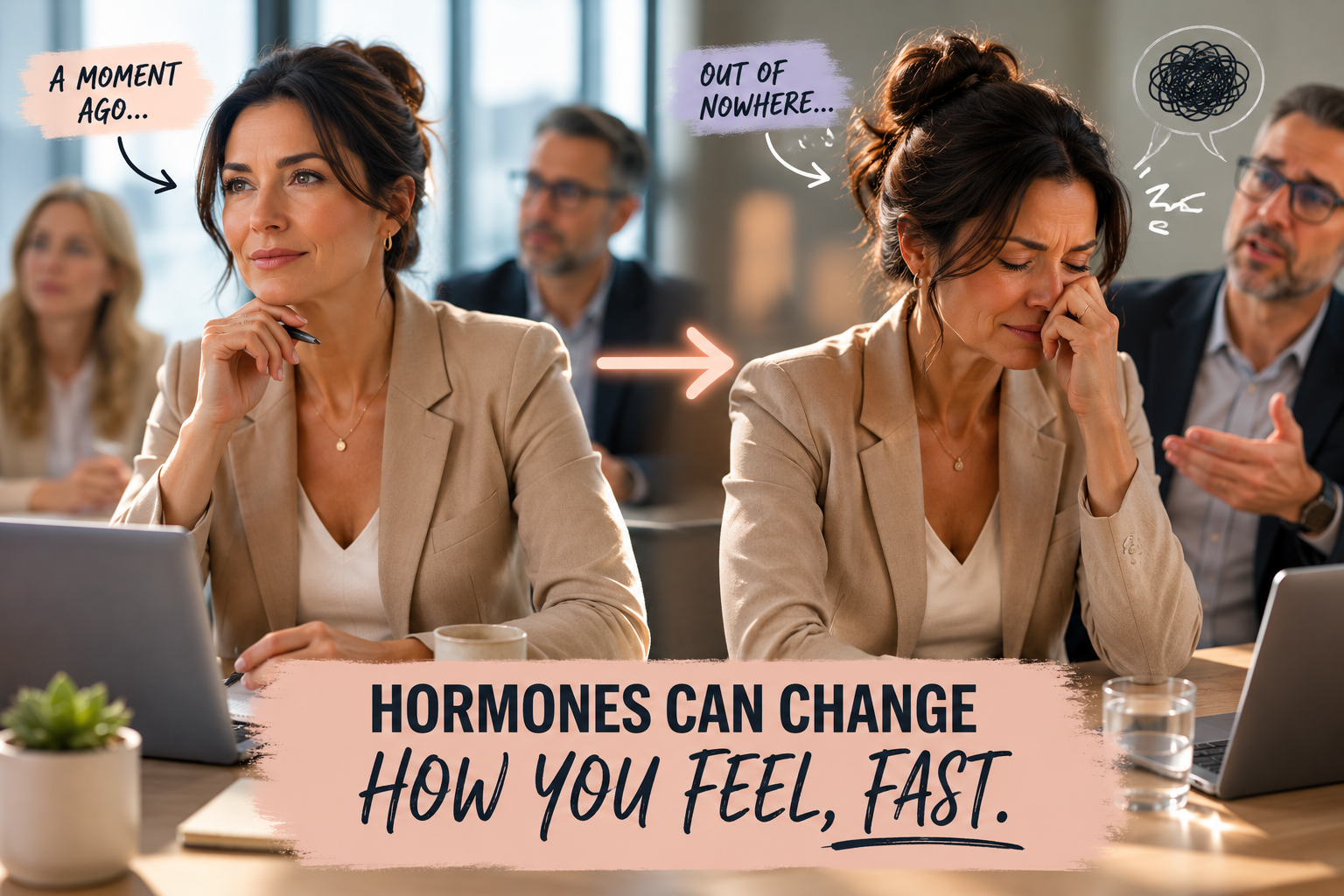
You're sitting in a work meeting, feeling totally fine — calm, focused, even a little proud of yourself for holding it together. Then, out of nowhere, your colleague makes a mildly annoying comment and suddenly you're blinking back tears or fighting the urge to say something you'd regret. Sound familiar? If you're in your 40s or beyond and you've been experiencing estrogen fluctuations mood swings that seem completely out of proportion to what's actually happening around you, you are not losing your mind. Your hormones are shifting — and they're taking your emotions along for the ride.
In this article, we're going to break down exactly why estrogen fluctuations affect your mood so dramatically, what's actually happening in your brain and body, and — most importantly — what you can realistically do about it. Because understanding the "why" behind these emotional storms makes them so much easier to manage.
Your Brain Runs on Estrogen (More Than You Probably Knew)
Most of us think of estrogen as a "reproductive hormone" — something that governs periods, fertility, and the like. But estrogen is deeply involved in how your brain functions. It influences serotonin, dopamine, and norepinephrine — the neurotransmitters that regulate your mood, motivation, and emotional resilience.
When estrogen levels are stable, your brain has reliable access to these mood-regulating chemicals. You feel like yourself. You can handle stress, bounce back from setbacks, and generally stay on an even keel.
When estrogen fluctuates — which is exactly what happens during perimenopause and menopause — all of that can go sideways fast.
Here's the thing: it's not just about low estrogen. It's the unpredictability of it. In perimenopause especially, estrogen doesn't drop in a neat, predictable line. It surges, crashes, and spikes again — sometimes within the same week. Your brain chemistry is essentially trying to keep up with a moving target, and it simply can't always manage it.
What Estrogen Fluctuations Actually Feel Like Day to Day
It would be easier if mood symptoms came with a clear label — "this irritability is brought to you by plummeting estrogen." But that's not how it works. Instead, you get a confusing mix of emotions that seem random and often feel completely disproportionate to your actual circumstances.
The Emotional Symptoms Nobody Warned You About
Women often describe this phase as feeling like they're not quite themselves — and that description is more accurate than it sounds. Common emotional experiences tied to estrogen fluctuations include:
- Sudden waves of irritability or anger that come from nowhere and disappear just as fast
- Crying unexpectedly over small things — a song, a commercial, a mildly stressful email
- Feeling anxious or on edge without a clear reason, especially in the mornings
- A flat, low mood that lingers for days, sometimes mistaken for depression
- Short fuse with people you love most, followed by guilt and confusion
Notice that these can swing in opposite directions — high anxiety one day, heavy flatness the next. That's the hormonal roller coaster in action, and it's one reason so many women in perimenopause and menopause feel completely disoriented by their own emotions.
When It's Hard to Tell Hormones from "Just Life"
Here's something that comes up a lot in our community at orozna.com: many women in their 40s are also navigating some genuinely stressful life circumstances — aging parents, teenage kids, career pressures, relationship shifts. So when the emotional chaos hits, it's easy to assume it's situational.
But if your emotional reactions feel outsized relative to what's happening, or if you notice clear patterns around your cycle (or what used to be your cycle), that's a strong signal that estrogen fluctuations are in the driver's seat — not just your circumstances.
The Science Behind the Mood-Estrogen Connection
You don't need a medical degree to understand this, but a little context goes a long way in making sense of what you're experiencing.
Estrogen has direct effects on your brain's limbic system — the part responsible for processing emotions. It also supports the production and sensitivity of serotonin receptors. So when estrogen drops suddenly, you effectively have fewer tools available for emotional regulation. Think of it like trying to drive in the rain with worn-out windshield wipers — you're working harder for a worse result.
Estrogen also plays a role in how your body handles cortisol, the stress hormone. When estrogen levels are low or erratic, your cortisol response can become exaggerated. Minor stressors hit harder. Recovery takes longer. That's why things that never used to bother you suddenly feel genuinely overwhelming.
There's also a sleep connection that makes everything worse. Estrogen fluctuations frequently disrupt sleep — through night sweats, racing thoughts, or simply lighter sleep patterns. And when you're not sleeping well, emotional regulation takes a serious hit. It's a feedback loop that can be hard to break without addressing the hormonal piece.
Practical Ways to Steady the Emotional Ups and Downs
The good news — and there genuinely is good news — is that estrogen fluctuations mood swings don't have to run your life. There are real, evidence-informed strategies that make a meaningful difference, and many of them don't require a prescription.
Stabilize Your Blood Sugar (Seriously, This Matters More Than You Think)
Estrogen fluctuations already make your mood volatile. Skipping meals, eating high-sugar foods, or going long stretches without protein adds fuel to that fire. Blood sugar crashes amplify irritability and anxiety, and they're completely within your control.
Eating regularly — protein with every meal, healthy fats, complex carbohydrates — helps smooth out one layer of the mood chaos, even when you can't control your hormones. Small change, real impact.
Move Your Body in Ways That Support (Not Exhaust) You
Exercise is one of the most powerful tools for mood regulation during perimenopause and menopause. It boosts endorphins, supports serotonin production, reduces cortisol, and improves sleep quality — all the things estrogen fluctuations are disrupting.
That said, this isn't the time for brutal, punishing workouts if your body is already under hormonal stress. Walking, strength training, yoga, swimming — these tend to be well-tolerated and genuinely helpful. Overtraining can actually spike cortisol further and worsen mood symptoms, so more isn't always better here.
Track Your Patterns to Find Your Triggers
This one is underrated. Keeping a simple daily log of your mood, sleep, energy, and any symptoms can reveal patterns you'd otherwise miss completely. Maybe you're consistently lower in the mornings. Maybe your worst emotional days happen two to three days before any spotting. Maybe poor sleep the night before is your biggest trigger.
Patterns give you power. When you can see the pattern, you can prepare, adjust, and give yourself a little more grace on the hard days — rather than wondering what's wrong with you.
If you're looking for structured support in understanding and managing what's happening in your body, orozna.com's digital resources for women in perimenopause and menopause offer practical, evidence-based guidance designed specifically for women navigating this transition — not generic wellness advice that doesn't account for where you actually are hormonally.
What Estrogen Fluctuations Mean for Your Relationships
This is the part women often don't talk about enough, because it can feel vulnerable or even a little embarrassing. But it's worth naming honestly: estrogen fluctuations mood swings can put real strain on your relationships — with partners, with kids, with friends, with colleagues.
When you snap at someone you love and then feel awful about it twenty minutes later, that's not a character flaw. But if it's happening repeatedly without any understanding of why, it can create distance and confusion for the people around you — and for you.
One of the most useful things you can do is have a simple, honest conversation with the people closest to you. You don't need to give them a biology lecture. Just letting a partner or a close friend know that your hormones are in transition right now — and that some of what they're seeing is physiological, not personal — can ease a surprising amount of tension.
Self-compassion matters too. You're dealing with something real. Treating yourself the way you'd treat a good friend going through the same thing changes how you move through the hard days.
When to Talk to a Healthcare Provider About Mood Symptoms
Not everything can or should be managed with lifestyle changes alone. If your mood symptoms are severe, persistent, or significantly affecting your ability to function — at work, in your relationships, in your daily life — that's a conversation worth having with your doctor or a menopause specialist.
Hormone therapy is an option that works well for many women and has been reconsidered in recent years with a more nuanced view of its risks and benefits. Antidepressants or anti-anxiety medications can also be genuinely helpful in some cases, particularly if underlying anxiety or depression is part of the picture.
You don't have to white-knuckle your way through this transition. Seeking support isn't admitting defeat — it's actually the smart move.
Therapy — specifically cognitive behavioral therapy (CBT) — has also shown real promise for menopausal mood symptoms, helping women develop practical tools for managing the emotional volatility that comes with hormonal shifts. It's not about "fixing your mindset." It's about building concrete skills for a genuinely difficult phase of life.
You're Not Overreacting — Your Body Is Changing
Here's what we want you to take away from all of this: the estrogen fluctuations mood swings you're experiencing aren't a sign that something is fundamentally wrong with you as a person. They're a sign that your body is going through a significant hormonal transition — one that your brain is working hard to adapt to.
This phase is real. It's physiological. And it's manageable with the right information and support in your corner.
The women who tend to navigate perimenopause and menopause with the most clarity and confidence are the ones who stop trying to push through it alone and start equipping themselves with knowledge that's actually relevant to where they are. If you're ready to do that, explore what orozna.com has put together specifically for women in perimenopause and menopause — it's built around the questions and challenges you're actually facing right now, not the ones that sounded good in a general wellness brochure.