Why Your Skin Is Changing in Perimenopause
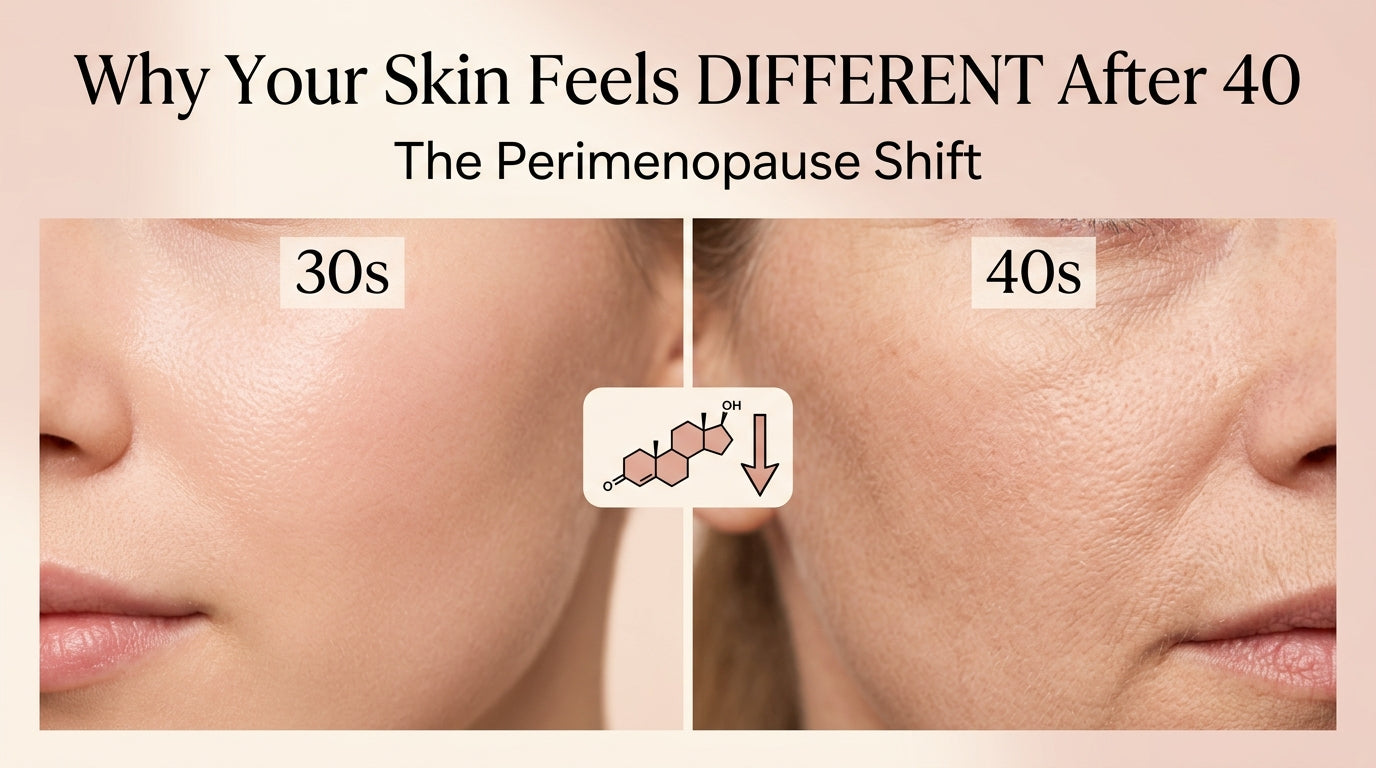
You wash your face with the same cleanser you've used for years, pat it dry, and then catch your reflection in the mirror — and something just looks… different. Your skin feels tight almost immediately. There are patches of flakiness around your nose and chin that weren't there six months ago. And is it just you, or do fine lines seem to have appeared almost overnight? If this sounds familiar, you're not imagining it. Perimenopause skin changes and dry skin are some of the most common — and least talked about — symptoms women in their 40s and beyond experience. And understanding what's actually happening beneath the surface is the first step to doing something about it.
In this article, you'll learn exactly why your skin behaves so differently during perimenopause, what's driving those changes on a hormonal level, and what you can realistically do to feel comfortable and confident in your skin again. This isn't about chasing a younger version of yourself — it's about understanding your body so you can work with it, not against it.
What Perimenopause Actually Does to Your Skin (It's Not Just Aging)
Here's something that trips a lot of women up: they chalk their skin changes up to "just getting older" and accept them as inevitable. But perimenopause isn't just aging — it's a specific hormonal transition that triggers very particular changes in your skin, and knowing the difference matters.
Perimenopause typically begins in your early-to-mid 40s, though it can start earlier. During this phase, your estrogen levels start fluctuating and gradually declining. Estrogen isn't just a reproductive hormone — it plays a massive role in your skin's health. It stimulates collagen production, maintains skin moisture and elasticity, and supports the skin barrier that keeps irritants out and hydration in.
When estrogen drops, all of those functions start to slow down or become less efficient. The result? Skin that feels drier, looks duller, loses firmness more quickly, and becomes more reactive than it used to be. The timeline varies from woman to woman, but many notice the shift in their skin before they even realize they're in perimenopause at all.
That's not aging in the general sense. That's a specific hormonal cause producing specific effects — and that distinction matters when you're deciding how to respond to it.
The Estrogen-Collagen Connection Behind Perimenopause Skin Changes and Dry Skin
Let's get into the mechanics a bit, because once you understand what's happening, the changes stop feeling so random and scary.
Collagen Loss Starts Faster Than You Think
Estrogen directly stimulates fibroblasts — the cells responsible for producing collagen and elastin. As estrogen declines, fibroblast activity drops. Some research suggests that skin can lose a significant portion of its collagen in the first few years after estrogen begins declining. This isn't a slow, gradual fade — it can feel like it happens fast, which is why so many women describe looking in the mirror one day and feeling like their face changed almost overnight.
Collagen is what gives your skin its structure and bounce. Less collagen means skin looks thinner, lines deepen more easily, and the overall texture changes. You might notice your skin no longer "snaps back" the way it used to when you press it.
Your Skin Barrier Is Under Pressure
Estrogen helps maintain the skin barrier — the outermost protective layer of your skin that regulates moisture and protects against environmental damage. When estrogen drops, the skin barrier becomes less effective at retaining water. This is a big reason why perimenopause skin changes and dry skin go hand in hand.
You may notice:
- Skin that feels tight or uncomfortable shortly after cleansing
- Increased sensitivity or redness — even to products you've used for years
- Flakiness or rough patches, especially around the nose, chin, and forehead
- Itching or a general feeling that your skin is "thirsty" no matter how much moisturizer you apply
That last point — applying moisturizer and still feeling dry — is one of the most frustrating parts. And it often means the issue isn't just dehydration on the surface. It's a structural change in how your skin holds onto moisture at a deeper level.
Hormonal Acne, Dullness, and Other Changes You Might Not Have Expected
Dry, dull skin is the most commonly discussed perimenopause skin change — but it's not the only one, and some of the others catch women completely off guard.
Breakouts in Your 40s Are Real
Yes, you can absolutely experience acne during perimenopause, even if you had perfectly clear skin in your 30s. As estrogen fluctuates, the ratio between estrogen and androgens (like testosterone) can shift, leading to increased sebum production and — frustratingly — breakouts alongside dry skin at the same time. Dealing with both simultaneously can feel completely contradictory, but it's actually a very common experience.
Skin Tone and Pigmentation Shifts
Many women also notice changes in skin tone during perimenopause. Hyperpigmentation — dark spots or uneven patches — can become more pronounced. This happens partly because estrogen fluctuations can affect melanin production, and partly because years of sun exposure start showing up more clearly as the skin's natural renewal rate slows down.
Your skin cell turnover rate also decreases during this phase. Younger skin regenerates itself roughly every 28 days; by the time you're in perimenopause, that cycle can stretch to 45-60 days. The buildup of older cells on the surface contributes to that dull, flat complexion that even a good concealer can't quite fix.
Changes Below the Surface
Fat distribution in the face also shifts during perimenopause. The subcutaneous fat that gives cheeks their fullness begins to redistribute or diminish, and the loss of volume in certain areas can create a hollower, more tired appearance — even when you're well-rested and feeling fine. This is one of those changes that's easy to misread as just "looking tired" when it's actually a structural hormonal change.
What Actually Helps: Practical Skincare Adjustments That Work With Your Changing Skin
Here's where we get practical. Because understanding what's happening is only useful if you know what to do about it.
Rethink Your Cleanser First
If you're still using a foaming or gel-based cleanser, that might be the single biggest change you can make right now. These formulas are great for oily or combination skin, but they strip the natural oils that perimenopausal skin desperately needs. Swap to a cream or oil-based cleanser that cleans without disrupting your skin barrier. Your skin should never feel "squeaky clean" — that tight, dry feeling after washing is a sign the barrier is being compromised.
Hyaluronic Acid Is Not Enough on Its Own
Hyaluronic acid has become almost synonymous with hydration, but here's something worth knowing: it works best when it has moisture to draw into the skin. In a dry environment — or on already depleted skin — it can actually pull moisture from deeper layers if not properly sealed in. Layer it under a richer moisturizer, and apply it to slightly damp skin for the best effect.
For perimenopausal skin specifically, look for moisturizers that include ceramides, fatty acids, and niacinamide. These ingredients actively support barrier repair, which is the root issue driving perimenopause skin changes and dry skin rather than just adding temporary moisture on top.
Don't Skip SPF — But Choose Wisely
Sun protection is non-negotiable, but the texture matters more during perimenopause. If your SPF feels heavy or occlusive, you won't use it consistently. Mineral-based SPFs with added hydrating ingredients tend to work well for this skin type. Think of SPF as your most important anti-pigmentation tool right now — it won't reverse existing dark spots, but it absolutely prevents new ones from forming and deepening.
Consider Adding Retinoids Thoughtfully
Retinoids (vitamin A derivatives) are one of the most well-researched skincare ingredients for supporting collagen production and speeding up cell turnover — both of which slow during perimenopause. But if your skin barrier is already compromised, jumping straight into a strong retinol can cause serious irritation. Start low, go slow, and always pair with a strong moisturizer and SPF.
If you're navigating all of this and feeling overwhelmed by conflicting product advice, resources like orozna.com's digital guides on perimenopausal skin and hormone health can help you cut through the noise and build a routine that actually makes sense for where your body is right now.
The Lifestyle Factors That Are Making Your Skin Worse (That Nobody Mentions)
Skincare products are only part of the picture. Several lifestyle factors accelerate the perimenopause skin changes and dry skin cycle, and they often get overlooked when women are focused on finding the right serum.
Sleep and Stress Are Doing More Damage Than You Realize
Cortisol — your primary stress hormone — breaks down collagen. During perimenopause, when collagen production is already slowing, chronic stress creates a genuine double hit. And sleep disruption (which affects most women during perimenopause due to night sweats and hormonal fluctuations) is when your skin does its repair work. Less quality sleep equals less skin repair. Full stop.
This isn't about telling you to "just relax" — it's about recognizing that managing stress and prioritizing sleep aren't just wellness buzzwords. They directly impact your skin at a biological level during this life phase.
What You're Eating Shows Up on Your Face
Omega-3 fatty acids play a role in maintaining the skin barrier from the inside out. If your diet is low in fatty fish, flaxseeds, or similar sources, your skin barrier is likely paying the price. Similarly, sugar and refined carbohydrates accelerate a process called glycation, which damages collagen fibers and contributes to sagging and dullness. Alcohol also dehydrates the skin significantly — even moderate regular consumption shows up in skin texture and tone over time.
Phytoestrogens — plant-based compounds found in soy, flaxseeds, and legumes — have been studied for their potential to mildly support estrogen-related functions in the body. While they're not a replacement for medical support, incorporating them into a balanced diet as part of a broader perimenopause wellness approach is worth discussing with your healthcare provider.
Hydration Matters More Now Than It Did Before
Your skin's ability to retain moisture decreases during perimenopause at both an internal and external level. Drinking adequate water — and not relying on coffee or caffeinated drinks as your primary fluid source — genuinely supports skin hydration from within. It won't undo hormonal changes, but it removes one unnecessary barrier to healthier skin.
When to Talk to a Doctor or Dermatologist About Perimenopause Skin Changes
Sometimes, adjusting your skincare routine and lifestyle habits is genuinely enough to make a noticeable difference. But there are situations where it's worth getting professional input.
Consider speaking with your doctor or a dermatologist if:
- Your skin changes are severe enough to cause discomfort or significantly affect your quality of life
- You're experiencing eczema flares or rosacea that's worsening alongside other perimenopausal symptoms
- Over-the-counter products and routine adjustments haven't made any difference after 8-12 weeks
- You're considering hormone replacement therapy (HRT) and wondering how it might affect your skin
HRT is a nuanced topic and not the right choice for every woman, but it's worth knowing that many women report meaningful improvement in skin dryness, elasticity, and overall texture when estrogen levels are supported medically. That's a conversation worth having with a qualified provider who knows your full health picture.
Prescription-strength retinoids, topical treatments for pigmentation, and in-office procedures like microneedling or laser resurfacing are also options that can be more effective than over-the-counter products for some women. The point is: you don't have to accept uncomfortable, unhappy skin as a permanent feature of this life phase.
Your Skin Is Changing — But You're Not at the Mercy of It
Perimenopause skin changes and dry skin are real, they're hormonally driven, and they're not just "aging" in the vague, nothing-you-can-do-about-it sense. Understanding the estrogen-skin connection, adjusting your skincare approach, supporting your skin from the inside through nutrition and lifestyle, and knowing when to seek professional support — these are all meaningful, actionable steps that genuinely move the needle.
Your skin in perimenopause deserves the same curiosity and care as every other part of your health during this transition. The goal isn't to fight the changes — it's to understand them well enough to respond intelligently. And you absolutely can get to a place where your skin feels comfortable, healthy, and like yours again.
If you want a clearer roadmap for managing not just skin changes but the full spectrum of what perimenopause brings, orozna.com's digital resources for women in perimenopause and menopause are a practical place to start building that knowledge and confidence.