Joint Pain in Perimenopause: The Surprising Connection to Estrogen
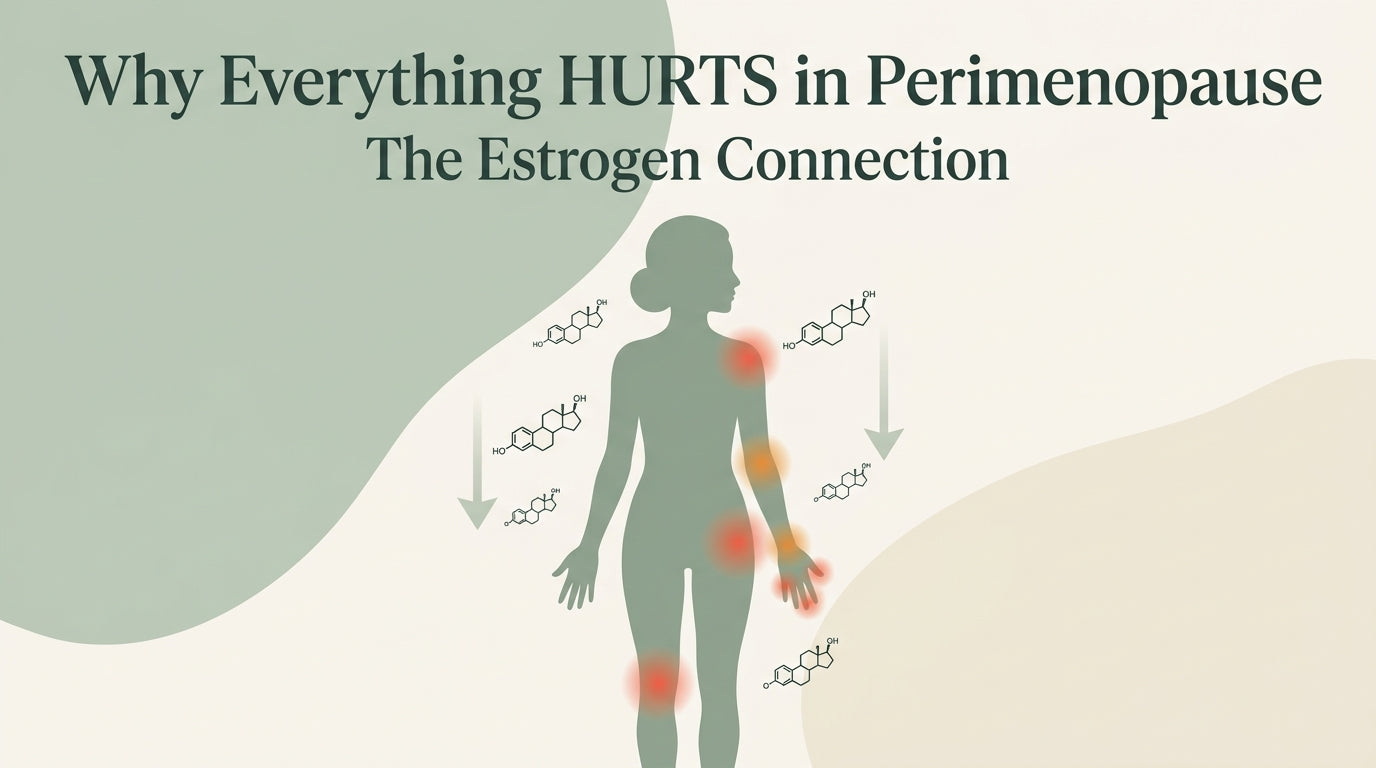
You wake up one morning, swing your legs over the side of the bed, and your knees feel like they belong to someone about thirty years older than you. Or maybe it's your fingers — stiff and achy when you reach for your morning coffee. You haven't started a new exercise routine, you didn't overdo it in the garden, and yet here you are, wincing at movements you never thought twice about before. If this sounds familiar, you're not imagining things, and you're definitely not alone. Perimenopause joint pain linked to estrogen changes is one of the most overlooked — and most frustrating — symptoms of this life stage.
In this article, you'll find out exactly why your joints are protesting right now, what estrogen has to do with it, and what you can actually do to feel better. No vague advice, no oversimplification — just real, practical information that makes sense of what's happening in your body.
Why Your Joints Are Suddenly Angry (And It's Not Just "Getting Older")
Here's the thing that most women aren't told at their annual checkup: estrogen does a whole lot more than regulate your menstrual cycle. It's also a powerful anti-inflammatory agent that helps keep your joints lubricated, your cartilage healthy, and your connective tissues flexible.
When estrogen levels start fluctuating in perimenopause — and they do fluctuate wildly before they eventually drop — the protective effects on your joints diminish. The synovial fluid that cushions your joints can decrease. Inflammation that estrogen once kept in check starts showing up uninvited.
The result? Aching knees, stiff hips, sore fingers, and a lower back that suddenly needs a lot more convincing to cooperate in the morning. This is perimenopause joint pain driven by estrogen shifts, and it's genuinely common. Many women start experiencing it in their early-to-mid forties, often before their periods even become irregular — which is part of why it catches so many people off guard.
The Estrogen-Joint Connection: What's Actually Happening Inside Your Body
To understand why estrogen matters so much to your joints, it helps to know a little about how joints work in the first place.
Estrogen and Inflammation
Estrogen has a documented relationship with inflammatory pathways in the body. When estrogen is at healthy levels, it helps regulate the immune response in a way that keeps chronic low-grade inflammation at bay. When it drops or becomes erratic — as it does throughout perimenopause — that regulation weakens.
This doesn't mean you suddenly have arthritis. But it does mean your joints become more vulnerable to inflammation, particularly in areas that already take a lot of daily load, like your knees, hips, and lower back.
Estrogen and Cartilage
Cartilage — the smooth tissue that cushions the ends of your bones — has estrogen receptors. Yes, literally. Which means estrogen actively plays a role in maintaining cartilage integrity. When estrogen levels fall, cartilage can break down faster than it repairs itself.
This is one reason women are significantly more likely to develop osteoarthritis than men, and why that risk increases sharply after menopause. The estrogen-cartilage connection is real, it's measurable, and it's why what you do during perimenopause matters so much for your joint health long-term.
Estrogen and Tendons
Less talked about but equally important: estrogen also influences tendon and ligament laxity. When estrogen fluctuates, tendons can become stiffer or, paradoxically, too loose — both of which contribute to joint discomfort and instability. Some women notice this as a general feeling that their joints are "unreliable," which is unsettling when it happens without any clear cause.
Where Perimenopause Joint Pain Tends to Show Up Most
Joint pain during perimenopause doesn't always follow a predictable pattern, but there are some common hotspots that women tend to report.
- Knees: Often one of the first places women notice stiffness, particularly when climbing stairs or sitting for long periods.
- Hips: Hip pain and tightness are extremely common, sometimes mistaken for a muscle issue when the joint itself is the source.
- Fingers and wrists: Morning stiffness in the hands is a surprisingly frequent complaint — this gets misdiagnosed as early rheumatoid arthritis more than you'd think.
- Lower back: The sacroiliac joint in particular can become inflamed, contributing to the kind of lower back pain that feels different from a muscle strain.
- Shoulders: Frozen shoulder (adhesive capsulitis) actually peaks in women around menopause — the estrogen connection here is increasingly well-supported.
If you're experiencing pain in multiple joints simultaneously, and it seems to come and go without obvious cause, perimenopause is a very legitimate explanation worth discussing with your doctor.
What Actually Helps: Managing Joint Pain During Perimenopause
Let's be direct here — there's no single fix. But there are a number of approaches that genuinely move the needle, and understanding why they work makes it easier to stick with them.
Movement (Yes, Even When It Hurts)
Gentle, consistent movement is one of the most evidence-backed ways to manage joint pain during perimenopause. The instinct to rest inflamed joints makes sense, but too much rest actually accelerates stiffness and muscle loss — which puts even more load on your joints.
Low-impact options like swimming, cycling, walking, yoga, and Pilates keep joints mobile without grinding through already irritated cartilage. Strength training is also worth the investment here — building muscle around vulnerable joints like the knees and hips acts as a natural brace.
Starting small counts. Even ten to fifteen minutes of intentional movement daily adds up over weeks and months.
Anti-Inflammatory Nutrition
What you eat has a direct impact on systemic inflammation, which means it has a direct impact on how your joints feel. Foods high in refined sugar, processed carbohydrates, and omega-6 fats tend to amplify inflammation. Foods rich in omega-3s (think fatty fish, flaxseeds, walnuts), antioxidants (berries, leafy greens), and collagen-supporting nutrients (vitamin C, zinc) actively work against it.
This doesn't have to be complicated or restrictive. Small, consistent shifts — adding more vegetables, reducing ultra-processed snacks, including oily fish a couple of times a week — genuinely accumulate into meaningful changes in how your joints feel.
Sleep and Stress: The Overlooked Amplifiers
Poor sleep and chronic stress both raise cortisol, which in turn raises inflammation throughout the body. Since perimenopause already disrupts sleep and often brings increased anxiety, this creates a feedback loop where your joint pain gets worse just when everything else feels harder too.
Prioritizing sleep hygiene — consistent sleep and wake times, a cool dark room, limiting screens before bed — isn't just about feeling rested. It's a legitimate pain management strategy. The same goes for stress reduction practices, whether that's breathwork, walking, journaling, or whatever actually works for you.
Getting the Right Information Before Anything Else
One of the most consistent things we hear from women at orozna.com is that they spent years managing symptoms without ever understanding the underlying hormonal picture driving them. When you understand what's actually happening with your estrogen, your sleep, your mood, and your joints as an interconnected system — rather than a random collection of problems — everything becomes more manageable.
That's exactly the kind of clarity that orozna.com's digital resources for women in perimenopause and menopause are built around — helping you connect the dots between your symptoms so you're not just chasing each one in isolation.
Perimenopause Joint Pain and Estrogen: When to Talk to Your Doctor
Most perimenopause-related joint pain is manageable with lifestyle changes, but there are situations where a medical conversation is genuinely important.
You should make an appointment if:
- Your joint pain is severe, sudden, or affecting your ability to carry out daily tasks
- You notice significant swelling, redness, or warmth around a joint
- You've had unexplained weight loss alongside joint pain
- Pain is asymmetrical or concentrated in specific small joints (fingers, toes) — this warrants ruling out autoimmune conditions
- Symptoms don't improve at all after several weeks of consistent lifestyle adjustments
Hormone replacement therapy (HRT) is also worth discussing with your doctor if joint pain is one of several perimenopausal symptoms significantly affecting your quality of life. Research does suggest that HRT can have a protective effect on joint health, particularly cartilage, and many women report meaningful improvement in musculoskeletal symptoms. It's not right for everyone, but it deserves a real conversation rather than being dismissed out of hand.
When you go to that appointment, being able to describe your symptoms clearly — when they started, which joints are affected, what makes them worse or better, and how they relate to other perimenopausal symptoms you're experiencing — will make that conversation far more productive.
Long-Term Joint Health Starts Now, Not After Menopause
Here's something that doesn't get said often enough: the habits you build during perimenopause have a disproportionate impact on how your joints feel in your fifties, sixties, and beyond. This is the window where proactive choices really count.
Bone density, muscle mass, and cartilage health all respond to the inputs you give your body right now. A woman who builds consistent strength training, anti-inflammatory eating habits, and adequate sleep practices during her perimenopausal years arrives at postmenopause in a meaningfully better position than one who waits until symptoms become severe to take action.
That sounds like pressure, but it's actually good news — because you still have time, and you don't need to overhaul your entire life to make a real difference. Small, consistent changes compound in the same way that neglect does.
Understanding your body through this transition is genuinely empowering. When you know why your joints ache, why you're not sleeping, why your mood is unpredictable — you're not at the mercy of symptoms anymore. You're working with your biology instead of feeling blindsided by it. That shift in perspective is something women in our community describe as one of the most valuable things they've gained from their time with us.
Perimenopause joint pain driven by estrogen changes is real, it's common, and it's manageable — but it responds best to a whole-body approach rather than treating each symptom in a vacuum. Move consistently, eat to reduce inflammation, protect your sleep, and get proper support for the hormonal picture underneath it all. If you're ready to stop guessing and start understanding what's actually happening in your body, orozna.com's resources for women navigating perimenopause and menopause are a genuinely practical place to start.