Perimenopause Bloating: Why Your Stomach Feels Different Now
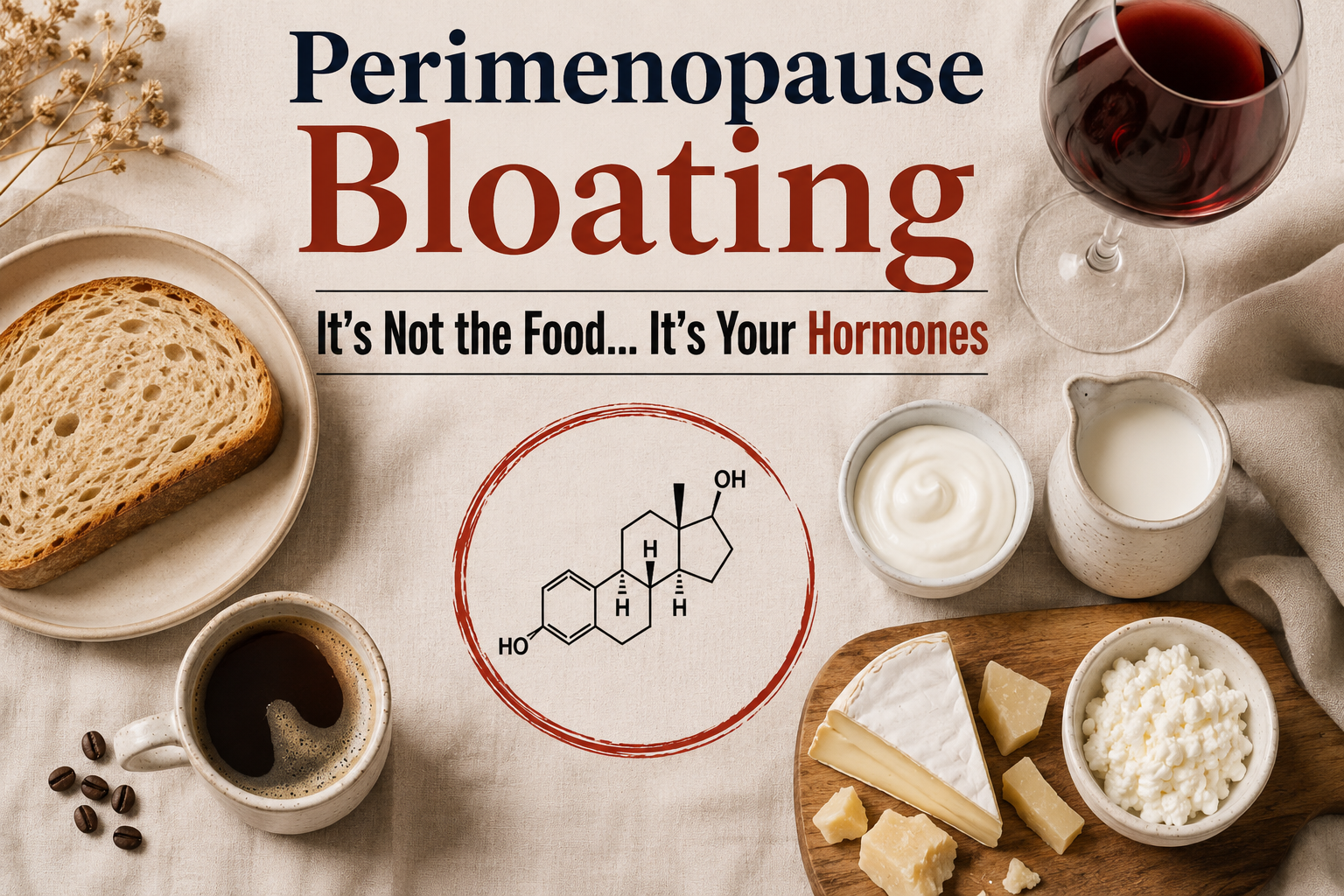
You wake up in the morning, and before you've even had your first cup of coffee, your stomach already feels puffy and uncomfortable. By lunchtime, you look like you've swallowed a balloon. You haven't changed your diet, you're not eating anything unusual, and yet here you are — pants that fit perfectly last week now digging into your waist by mid-afternoon. If this sounds familiar, you're not imagining it. Perimenopause bloating and digestion changes are incredibly common, and they catch so many women completely off guard. This isn't just water retention or eating too fast. Something deeper is going on, and understanding it makes all the difference.
In this article, you'll learn exactly why your stomach behaves so differently now, what's actually happening inside your body during perimenopause, and — most importantly — what you can do to feel more like yourself again. This isn't generic "eat more fiber" advice. This is real, practical information grounded in what women in their 40s and beyond actually experience.
Your Hormones Are Running the Show (and Your Gut Knows It)
Here's something your doctor might not have mentioned: your digestive system is deeply sensitive to hormonal changes. Estrogen and progesterone don't just regulate your cycle — they influence how your gut moves, how much gas it produces, and how your body handles fluid retention.
When estrogen starts fluctuating during perimenopause, it creates a ripple effect throughout your entire system. One week your digestion is perfectly normal. The next, you're constipated, then suddenly dealing with looser stools, then back to bloating. This inconsistency is maddening, and it's entirely hormonal.
The Estrogen-Gut Connection
Estrogen has a direct relationship with the gut microbiome — the community of bacteria that lives in your digestive tract. When estrogen levels drop or swing unpredictably, your gut bacteria can shift too. A less balanced microbiome means more gas-producing bacteria, slower gut motility, and more inflammation. That translates directly into bloating, cramping, and that heavy, full feeling even when you haven't eaten much.
Progesterone is also part of this picture. Higher progesterone levels slow down the digestive tract (this is why so many women feel constipated in the second half of their cycle). As progesterone becomes more erratic in perimenopause, your gut transit time — how long it takes food to move through your system — becomes unpredictable. Some days everything moves too slowly. Other days, not slowly enough.
Cortisol Makes Everything Worse
Stress hormones are another piece of the puzzle. Many women in perimenopause notice that stress hits differently now — it feels bigger, harder to shake. Elevated cortisol directly affects gut function, increasing gut permeability (often called "leaky gut") and triggering inflammation. If you've noticed that stressful days always seem to come with digestive discomfort, that's not a coincidence.
Why Perimenopause Bloating and Digestion Issues Feel So Different from PMS Bloating
Most women are familiar with the bloating that comes with PMS. It shows up a few days before your period, and then disappears when your cycle starts. Perimenopausal bloating doesn't play by those rules.
It can show up any day, with no predictable pattern. It can last for days or even weeks at a stretch. It often doesn't respond to the things that used to help — cutting back on salt, avoiding carbonated drinks, taking a magnesium supplement. That's because this bloating isn't just about fluid or gas in isolation. It's a full-system response to hormonal upheaval.
Women often describe perimenopausal bloating as a feeling of heaviness and pressure in the lower abdomen, different from the gassiness of typical digestive upset. Some women feel it more in their upper abdomen. Others notice their entire midsection feels "thick" by the end of the day, even when the morning started fine. All of these variations are real and valid experiences.
Foods That Used to Be Fine Are Now Causing Problems
This is the part that trips up so many women. You've been eating the same foods for decades with no issues. Now suddenly, that afternoon latte leaves you bloated for hours. A salad at lunch makes your stomach gurgle and cramp. A glass of wine at dinner that you've enjoyed for years now disrupts your sleep and leaves you puffy the next morning.
It's not all in your head. Your digestive system genuinely becomes more reactive during perimenopause.
Lactose and FODMAP Sensitivity
Dairy intolerance often increases as estrogen levels drop. Estrogen plays a role in how your body produces lactase — the enzyme needed to digest lactose. Less estrogen can mean less lactase, which means dairy that never bothered you before suddenly causes gas, bloating, and discomfort.
Similarly, FODMAP sensitivity (FODMAPs are fermentable carbohydrates found in foods like onions, garlic, beans, apples, and wheat) can increase during perimenopause. This is directly linked to gut microbiome changes. What your gut bacteria used to handle efficiently, they may now struggle with — producing excess gas and triggering bloating in the process.
Alcohol and Caffeine
Both caffeine and alcohol affect gut motility and can irritate the gut lining. In perimenopause, many women find their tolerance for both drops significantly. Alcohol in particular disrupts the gut microbiome and can worsen inflammation. If you've noticed a direct link between your evening glass of wine and next-morning puffiness, there's a real physiological reason for that.
Eating Speed and Meal Timing
One thing that's often overlooked: how and when you eat matters more now. Eating too quickly introduces excess air into the digestive tract. Large meals overwhelm a digestive system that's already working more slowly. Many women find that switching to smaller, more frequent meals makes a significant difference — not because of calories, but because it reduces the workload on a gut that's already under hormonal stress.
Practical Strategies That Actually Help
Let's talk about what you can actually do, because understanding the "why" is only useful if it leads to real relief.
- Support your gut microbiome: Focus on fermented foods like plain yogurt (if dairy works for you), kefir, sauerkraut, and kimchi. These introduce beneficial bacteria that can help rebalance a perimenopausal gut. If food sources are tricky, a quality probiotic supplement can help — look for one with multiple strains and a high CFU count.
- Prioritize magnesium: Magnesium helps regulate bowel movements and reduces water retention. Many women in perimenopause are low in magnesium without realizing it. Magnesium glycinate is well-tolerated and a good starting point.
- Move your body after meals: Even a ten-minute walk after eating helps stimulate gut motility. This is one of the simplest, most underrated tools for reducing bloating.
- Reduce gut irritants temporarily: Consider a short-term trial of reducing dairy, gluten, or high-FODMAP foods to see how your body responds. Keep a simple food and symptom journal for two weeks — patterns often emerge quickly.
- Stay hydrated: Counterintuitively, drinking more water helps reduce bloating caused by fluid retention. When you're dehydrated, your body holds onto water more aggressively.
- Stress management is not optional: Cortisol's effect on digestion is real. Even small daily practices — five minutes of deep breathing before meals, a consistent sleep routine, limiting evening screen time — can meaningfully reduce gut inflammation over time.
These strategies work best when they're layered together rather than tried one at a time. Gut health during perimenopause responds to a whole-system approach, not a single magic fix.
How Understanding Your Body Changes Everything
There's something that happens when women finally understand what's going on inside their bodies during perimenopause — the anxiety around symptoms starts to lift. When you know that the bloating is hormonal and connected to real physiological changes, it stops feeling like something is badly wrong with you. That shift in mindset matters more than most people realize.
One woman we hear from often at Orozna described it perfectly: she'd spent two years thinking she'd developed IBS or a food allergy, cycled through elimination diets, and visited multiple specialists. It wasn't until she understood the connection between her fluctuating estrogen and her gut symptoms that things started clicking into place. She didn't need a diagnosis for a new condition — she needed tools for the transition she was already in.
That's exactly the kind of support that Orozna's digital resources for women in perimenopause and menopause are built around — giving you the clear, honest information you need to understand your body and make changes that actually stick, without having to piece it all together yourself from a dozen different sources.
Perimenopause bloating and digestion changes are also worth tracking because they can signal whether your overall hormonal transition is progressing or stabilizing. Women who keep even a basic symptom journal often notice that bloating correlates with specific phases of their irregular cycles, with stress spikes, or with poor sleep weeks. That kind of self-knowledge becomes genuinely powerful when you're working with a healthcare provider or making decisions about lifestyle changes and supplements.
When to Talk to Your Doctor
Most perimenopausal bloating is hormonal and manageable with lifestyle changes. But there are times when it's worth getting checked out.
Talk to your doctor if you experience:
- Bloating that's persistent and severe, not just uncomfortable but painful
- Unexplained weight loss alongside bloating
- Visible abdominal distension that doesn't go down overnight
- Blood in your stool or significant changes in bowel habits that don't resolve
- Bloating that worsens rapidly over a short period of time
These symptoms can occasionally signal conditions unrelated to perimenopause that need medical evaluation. Most of the time, your doctor will confirm that your symptoms are hormonal — but ruling out other causes gives you peace of mind and makes sure you're getting the right support.
It's also worth having a conversation about hormone replacement therapy (HRT) if your symptoms are significantly affecting your quality of life. HRT isn't right for everyone, but for some women, stabilizing estrogen levels through medical support makes a profound difference to gut symptoms alongside other perimenopausal experiences. That's a conversation worth having with a provider who takes perimenopause seriously.
Your Gut Is Not Betraying You — It's Responding to a Big Transition
The bloating, the unpredictable digestion, the foods that suddenly don't agree with you anymore — none of this is your body failing. It's your body adapting to one of the biggest hormonal shifts of your life, and it's doing it imperfectly, just like most big transitions do.
The women who come out the other side of perimenopause feeling genuinely well aren't the ones who white-knuckled through it and waited for it to pass. They're the ones who got curious about what was happening, made thoughtful changes, and built a toolkit that worked for their specific body. That toolkit looks different for every woman — but it always starts with understanding.
Your stomach feeling different now isn't a mystery without a solution. It's a sign that your body needs a slightly different approach than it did in your 30s, and once you find that approach, you can feel a lot more comfortable in your own skin again. If you want structured, expert guidance to help you build that toolkit without the overwhelm, explore what Orozna has waiting for you — because you deserve support that actually speaks to where you are right now.