Night Sweats in Your 40s: Perimenopause or Something Else?
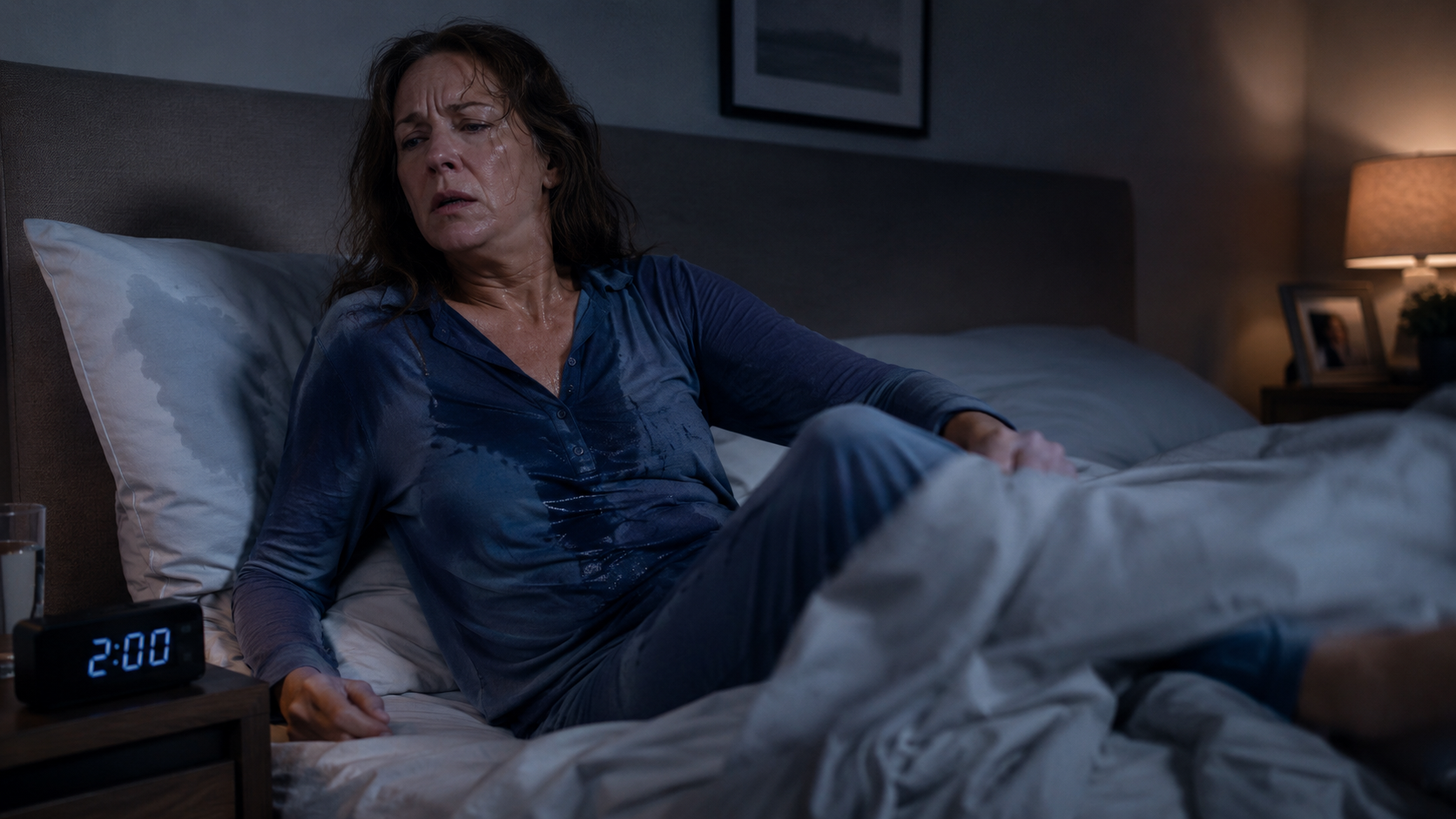
You wake up at 2am absolutely drenched. We're not talking about a little warmth — your pajamas are soaked, your pillow has a wet patch, and you're already kicking off the duvet before you're even fully awake. Sound familiar? If you're in your 40s and searching for answers about night sweats in women in their 40s and what causes them, you're definitely not alone. This is one of the most common (and most disruptive) experiences women describe when they first start wondering whether perimenopause has arrived.
In this article, we're going to walk you through exactly what's behind those middle-of-the-night wake-ups — whether it's perimenopause, something else entirely, or a combination of factors you hadn't considered. By the time you reach the end, you'll have a much clearer picture of what's happening in your body and what you can actually do about it.
Why Night Sweats Hit So Hard in Your 40s
Here's the thing about your 40s: your hormones don't just gradually and politely decline. For most women, it's more of a rollercoaster — estrogen and progesterone levels fluctuating unpredictably before they eventually drop. That hormonal chaos is what makes perimenopause such a confusing time.
Night sweats are essentially hot flashes that happen while you're asleep. Your brain's thermostat — the hypothalamus — gets confused by shifting estrogen levels and starts overreacting to tiny changes in your body temperature. It reads the situation as "too hot" and kicks off a whole cooling response: blood vessels near the skin dilate, your heart rate picks up slightly, and you sweat. A lot.
What makes this particularly exhausting is the pattern. You might sleep fine for a few nights, then get hit hard for a week. Your periods might still be fairly regular. You might not even think of yourself as "in menopause" — because technically, you're not. Perimenopause can start anywhere from your late 30s to mid-40s and last for years before your periods actually stop.
Is It Definitely Perimenopause? Other Causes Worth Ruling Out
Here's where it gets a little more complicated. Night sweats in women in their 40s aren't always caused by perimenopause, even when it feels like the obvious answer. Before you assume hormones are the whole story, it's worth considering a few other possibilities.
Thyroid Issues
An overactive thyroid (hyperthyroidism) can cause sweating, heat intolerance, disrupted sleep, and anxiety — symptoms that overlap significantly with perimenopause. Women are also far more likely than men to develop thyroid problems, and the risk increases with age. If you haven't had your thyroid checked recently, it's a genuinely useful thing to add to your next GP visit.
Blood Sugar Fluctuations
This one surprises a lot of women. If your blood sugar drops overnight — which can happen even without a diabetes diagnosis — your body releases adrenaline to correct it, and that can trigger sweating and waking. Eating a carb-heavy meal late at night or drinking alcohol in the evening can both contribute to this.
Medications and Supplements
Certain antidepressants (particularly SSRIs), some blood pressure medications, and even certain supplements can cause night sweats as a side effect. If your sweating started around the time you changed or added a medication, that's a conversation worth having with your doctor.
Anxiety and Stress
Chronic stress keeps your nervous system on high alert, which can disrupt your sleep and trigger sweating episodes that look a lot like hot flashes but are driven by cortisol rather than estrogen. And yes — perimenopause itself can increase anxiety, so sometimes these things are genuinely connected.
The honest answer? For most women in their 40s experiencing night sweats, perimenopause is the most likely culprit. But ruling out other causes isn't just being overly cautious — it helps you find the right solution faster.
How to Tell the Difference: Signs That Point Strongly to Perimenopause
If your night sweats are perimenopause-related, they rarely show up alone. Your body is usually sending a few other signals at the same time. Not everyone gets all of these, but spotting a cluster of symptoms can help you connect the dots.
- Irregular periods — cycles getting shorter, longer, heavier, lighter, or just plain unpredictable
- Mood shifts that feel out of proportion to what's happening in your life
- Daytime hot flashes (even mild ones) alongside the night sweats
- Waking at 3–4am and struggling to fall back asleep, even after the sweating passes
- Brain fog, forgetfulness, or a sense that your thinking is just slightly off
- Vaginal dryness or changes in your libido
- Joints that feel achier than usual
Take Sarah, a 44-year-old teacher who came to us having spent months convincing herself her night sweats were just stress from work. It was only when she started tracking her symptoms alongside her cycle that she noticed the sweats were always worse in the two weeks before her period — a classic sign of the progesterone fluctuations that happen in early perimenopause. Tracking changed everything for her, because it gave her something concrete to show her doctor.
If you're trying to get clarity on your own symptoms, the orozna.com perimenopause resources are designed specifically to help women in their 40s understand and track what's happening with their bodies — so you're not just guessing.
What Actually Helps: Practical Ways to Manage Night Sweats
Let's get practical. You don't have to just white-knuckle your way through interrupted sleep until menopause arrives. There are real, evidence-informed things you can do — starting tonight if you want.
Your Sleep Environment Matters More Than You Think
Keep your bedroom cooler than you think you need it — most sleep experts suggest somewhere between 16–19°C (60–67°F) is optimal, and for women dealing with night sweats, leaning toward the cooler end makes a significant difference. Breathable, moisture-wicking bedding (bamboo and linen are popular choices) helps your body regulate temperature without fully waking you up.
Layering is your friend. A light blanket you can kick off easily beats a heavy duvet you have to wrestle with at 3am.
What You Eat and Drink in the Evening
Alcohol is a significant night sweat trigger for many women — it affects how your body thermoregulates and disrupts your sleep architecture in ways that make you more vulnerable to waking. Spicy food, caffeine after mid-afternoon, and heavy meals close to bedtime can all make things worse.
Keeping your blood sugar stable through the evening — which might mean a small protein-based snack if you tend to eat dinner early — can reduce those adrenaline-driven wake-ups.
Stress Management (Yes, It's Actually Connected)
The relationship between cortisol and estrogen is real. When stress hormones are chronically elevated, they can exacerbate hormonal symptoms including night sweats. This isn't about telling you to "just relax" — it's about recognising that nervous system regulation is part of managing perimenopausal symptoms, not separate from it.
Even 10 minutes of slow breathing or a short walk before bed can make a measurable difference to how your body handles the night.
Medical Options Worth Knowing About
Hormone Replacement Therapy (HRT) remains one of the most effective treatments for hot flashes and night sweats, and current guidance from most women's health bodies has become much more positive about its use for healthy women in their 40s and 50s. It's not right for everyone, but if your night sweats are severely affecting your quality of life, it's absolutely a conversation to have with your GP or a menopause specialist.
Non-hormonal prescription options also exist — certain antidepressants and blood pressure medications have been shown to reduce hot flash frequency, and they're sometimes offered to women who can't or don't want to take HRT.
The Mental Load of Night Sweats Nobody Talks About
We'd be leaving something important out if we only talked about the physical side of this.
Night sweats don't just disrupt your sleep — they disrupt your day. You're functioning on broken sleep, which affects your mood, your focus, your patience, your confidence. You might be quietly worried that something is seriously wrong with you. You might feel like your body has become unpredictable in a way that's hard to explain to people who aren't experiencing it.
That sense of "what is happening to me?" is genuinely one of the most common things women in perimenopause describe. And it's compounded by the fact that so many women are still navigating this with very little information or support. Perimenopause often goes unrecognised — by doctors, by employers, by family members, and sometimes by women themselves — for years.
Knowing what you're dealing with doesn't make the symptoms disappear, but it does change how you respond to them. And that shift from confusion to understanding is actually significant.
When to See a Doctor About Your Night Sweats
Most of the time, night sweats in your 40s are perimenopause and manageable. But there are some situations where you should get checked out sooner rather than later.
- Your night sweats are severe enough that you need to change your clothes or bedding regularly overnight
- They're accompanied by fever, unexplained weight loss, or swollen lymph nodes
- You're also having heavy or very irregular bleeding that's new for you
- The sweating started suddenly and feels different to anything you've experienced before
- You have other symptoms you can't explain — persistent fatigue, heart palpitations, or significant anxiety that came out of nowhere
None of this is meant to alarm you. It's just a reminder that your symptoms deserve to be taken seriously, and advocating for yourself with your healthcare provider is always worth doing. If your GP isn't engaging with your concerns, asking specifically about a referral to a menopause clinic is a completely reasonable next step.
You Don't Have to Figure This Out Alone
Waking up drenched at 2am is miserable. But understanding why it's happening — and knowing that there are real, practical things you can do — genuinely helps. Night sweats in women in their 40s are almost always a sign that your body is going through something significant, not something sinister. The hormonal shift of perimenopause is real, it's common, and it's manageable with the right information and support.
If you're ready to go deeper — to really understand your symptoms, your cycle, and what your body is trying to tell you right now — orozna.com's digital resources for perimenopausal women are a great place to start building that understanding in a way that actually fits your life.