Progesterone Drop in Your 40s: What It Means for Your Body
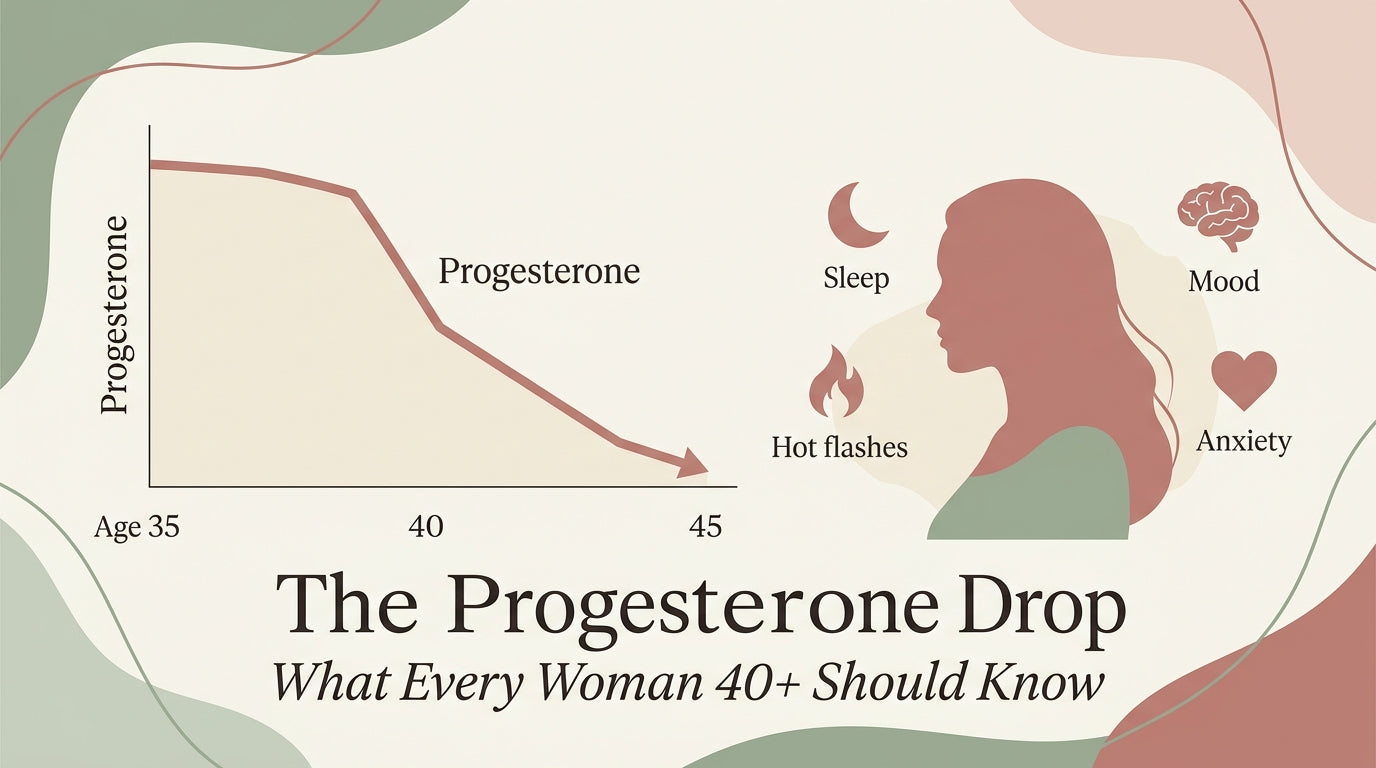
You're sleeping seven or eight hours but waking up exhausted. Your mood is all over the place — calm one hour, tearful or snappy the next, for no obvious reason. Sound familiar? If you're in your 40s and wondering what on earth is happening to your body, there's a good chance low progesterone symptoms in your 40s are at the root of it. Most women don't even know progesterone starts declining years before their periods stop, and that gap in knowledge can make the whole experience feel incredibly confusing and isolating.
In this article, we're going to walk through exactly what happens to progesterone as you hit your 40s, what symptoms to watch for, and — most importantly — what you can actually do about it. Because understanding what's going on in your body is the first step to feeling like yourself again.
Why Progesterone Starts Dropping Long Before Menopause
Here's something that surprises a lot of women: progesterone doesn't just suddenly crash when your periods stop. It starts declining gradually, sometimes as early as your mid-30s, and by your early to mid-40s, that drop can be significant enough to cause very real symptoms.
Progesterone is the hormone produced after ovulation. Every month, when your ovary releases an egg, the empty follicle (called the corpus luteum) produces progesterone to prepare your body for a possible pregnancy. But as you move through your 40s, ovulation becomes less regular. Some months you might not ovulate at all — and no ovulation means very little progesterone produced that cycle.
Estrogen, on the other hand, can remain relatively high or even fluctuate wildly during this time. The result? A hormonal imbalance that leans heavily toward estrogen dominance — even if your overall estrogen levels aren't "high" in absolute terms. It's the ratio that matters, and when progesterone is low relative to estrogen, your body knows it.
This phase — before your periods actually stop — is called perimenopause. It can last anywhere from a few years to over a decade. And low progesterone is often one of the very first signs that it's begun.
The Low Progesterone Symptoms in Your 40s You Might Be Ignoring
The tricky thing about low progesterone is that its symptoms overlap with so many other things — stress, poor sleep, anxiety, thyroid issues. It's easy to chalk everything up to "just being busy" or "getting older." But there are some patterns worth paying attention to.
Sleep Disturbances and Night Waking
Progesterone has a natural calming, sedative-like effect on the brain. It interacts with GABA receptors — the same receptors targeted by anti-anxiety medications — to help you feel relaxed and sleep soundly. When levels drop, that calming influence disappears.
Many women describe waking up between 2am and 4am and lying there with their minds racing. It's not insomnia in the traditional sense — they fall asleep fine — but they can't stay asleep. If this sounds like you, low progesterone could absolutely be a contributing factor.
Anxiety, Mood Swings, and Feeling "Not Yourself"
This one catches a lot of women off guard. Progesterone's calming effect doesn't just apply to sleep — it influences your overall emotional regulation. When it drops, some women experience a low-level anxiety that wasn't there before, or mood swings that feel disproportionate to what's actually happening in their lives.
One woman we hear from regularly at orozna.com describes it perfectly: she went from being someone who handled stress easily to feeling like she was "running on edge" all the time — irritable, overwhelmed, and not recognising herself. She'd been to her GP, had blood tests, and been told everything was "normal." But she was in her early 40s, her cycles were becoming irregular, and no one had mentioned progesterone.
Heavy, Irregular, or More Painful Periods
Progesterone is what keeps your uterine lining in check throughout your cycle. When it's low, the lining can build up more than it should — and when your period arrives, it arrives with a vengeance. Heavier bleeding, longer periods, more clotting, and worse cramping are all common low progesterone symptoms in your 40s.
If your periods have suddenly become something you dread when they used to be manageable, that shift matters. It's your body telling you the hormonal balance has changed.
Weight Gain Around the Middle
Progesterone actually acts as a natural diuretic and helps counterbalance some of estrogen's effects on fat storage. When progesterone is low and estrogen is relatively higher, many women notice puffiness, bloating, and weight gathering around the abdomen — even when their diet hasn't changed.
This isn't a willpower problem. It's a hormonal one.
Brain Fog and Difficulty Concentrating
Forgetting words mid-sentence. Walking into a room and having no idea why. Struggling to concentrate on tasks you used to breeze through. Brain fog is one of the most commonly reported but least talked-about symptoms of hormonal change in your 40s — and falling progesterone plays a direct role.
How to Know If Low Progesterone Is the Culprit
The honest answer? It can be genuinely hard to confirm through standard testing alone. Blood tests for progesterone are notoriously tricky — timing matters enormously (you need to test around day 21 of your cycle, or seven days after ovulation), and results can vary widely from cycle to cycle.
Some GPs are fantastic at recognising perimenopause and its hormonal shifts. Others will look at a single blood test result and tell you your hormones are "fine." If that's happened to you, you're far from alone.
What can help is tracking your symptoms carefully over a few months. Note where you are in your cycle when symptoms peak. Are the anxiety and poor sleep worse in the second half of your cycle (the luteal phase, after ovulation)? That's a classic pattern of low progesterone — symptoms flare when progesterone should be high but isn't.
Symptom tracking combined with honest conversations with a menopause-informed healthcare provider is usually more useful than relying on a single blood test. If you want structured support for understanding what's happening hormonally and what to do about it, orozna.com's digital resources for women in perimenopause and menopause can give you a solid foundation to work from — so you're not just guessing.
What Actually Helps When Progesterone Is Low
Good news: there are real, evidence-backed things you can do. Some are lifestyle-based, some are medical, and the right combination will be different for every woman.
Lifestyle Adjustments That Support Hormonal Balance
Stress is one of progesterone's biggest enemies. When you're chronically stressed, your body pumps out cortisol — and cortisol production competes directly with progesterone production. They share a hormonal pathway, so when stress goes up, progesterone often goes down. Reducing your stress load isn't just good advice, it has a direct biochemical impact on your hormone levels.
- Prioritise sleep hygiene: Going to bed and waking at consistent times, keeping your room cool and dark, and avoiding screens for 30–60 minutes before bed can all support better sleep even when progesterone is low.
- Support your blood sugar: Blood sugar spikes and crashes worsen hormonal symptoms. Eating protein and healthy fats with meals, reducing refined carbohydrates, and not skipping meals all help to keep cortisol and blood sugar steadier.
- Move your body, but don't over-train: Excessive high-intensity exercise can raise cortisol and worsen progesterone deficiency. Moderate exercise — walking, yoga, strength training at a manageable level — tends to support hormonal health better in perimenopause.
- Reduce alcohol: Alcohol disrupts the liver's ability to metabolise hormones and can exacerbate estrogen dominance. Even small amounts can make symptoms noticeably worse for some women.
Nutrients That Play a Role
Certain nutrients are directly involved in progesterone production and the body's ability to use it effectively. Vitamin B6, magnesium, and zinc all support the hormonal pathways involved in progesterone synthesis. Many women going through perimenopause are deficient in magnesium in particular — it's used up rapidly by the body during stress, and stress tends to be high during this life phase.
This isn't about loading up on supplements randomly. It's about making sure your nutritional foundation is solid enough to support your hormones in the first place.
Medical Options Worth Discussing With Your Doctor
Bioidentical progesterone (available as body-identical HRT in many countries) is something many women find genuinely helpful during perimenopause. Unlike older synthetic progestogens, body-identical progesterone is chemically identical to the progesterone your body produces naturally and tends to be much better tolerated.
If you're considering HRT or just want to understand your options, speaking to a menopause specialist rather than a general practitioner can make a significant difference. Menopause-informed doctors are much better equipped to interpret your symptoms in context, rather than just looking at a single blood test result.
The Emotional Side of This That Doesn't Get Talked About Enough
Let's be honest about something. Many women in their 40s who are experiencing these symptoms feel a deep sense of shame or confusion about them. They wonder if they're being dramatic. They've been told their tests are normal. They're managing careers, families, relationships — and quietly falling apart on the inside.
That experience is real, and it's incredibly common. The gap between "your blood tests are normal" and "I feel terrible and don't recognise myself" is one of the most frustrating parts of perimenopause for so many women.
Understanding the hormonal mechanics — knowing that what you're feeling has a biological cause — can be profoundly validating. It shifts the conversation from "what's wrong with me?" to "what's happening to my body, and what can I do about it?"
That's genuinely why resources that speak directly to women in this phase of life matter so much. Not generic wellness content, but things built specifically for the 40s-and-beyond experience — the kind of information that actually reflects what you're living through.
Making Sense of Low Progesterone Symptoms in Your 40s: Putting It All Together
Low progesterone in your 40s isn't a niche problem. It's an incredibly common part of the perimenopausal transition that affects sleep, mood, cycles, weight, and cognitive function — often years before most women even know perimenopause has begun.
The most empowering thing you can do is get informed. Track your symptoms, notice patterns, seek out healthcare providers who understand this phase, and build a support system that actually reflects where you are in life.
You don't have to white-knuckle your way through this decade feeling like a stranger in your own body. There's so much you can do — starting right now — to feel better. If you're ready to go deeper and get practical, structured guidance built specifically for women in perimenopause and menopause, orozna.com's digital resources for women in their 40s and beyond are a great place to start building that foundation.