Perimenopause Rage: Is This Normal? (Yes, and Here's Why)
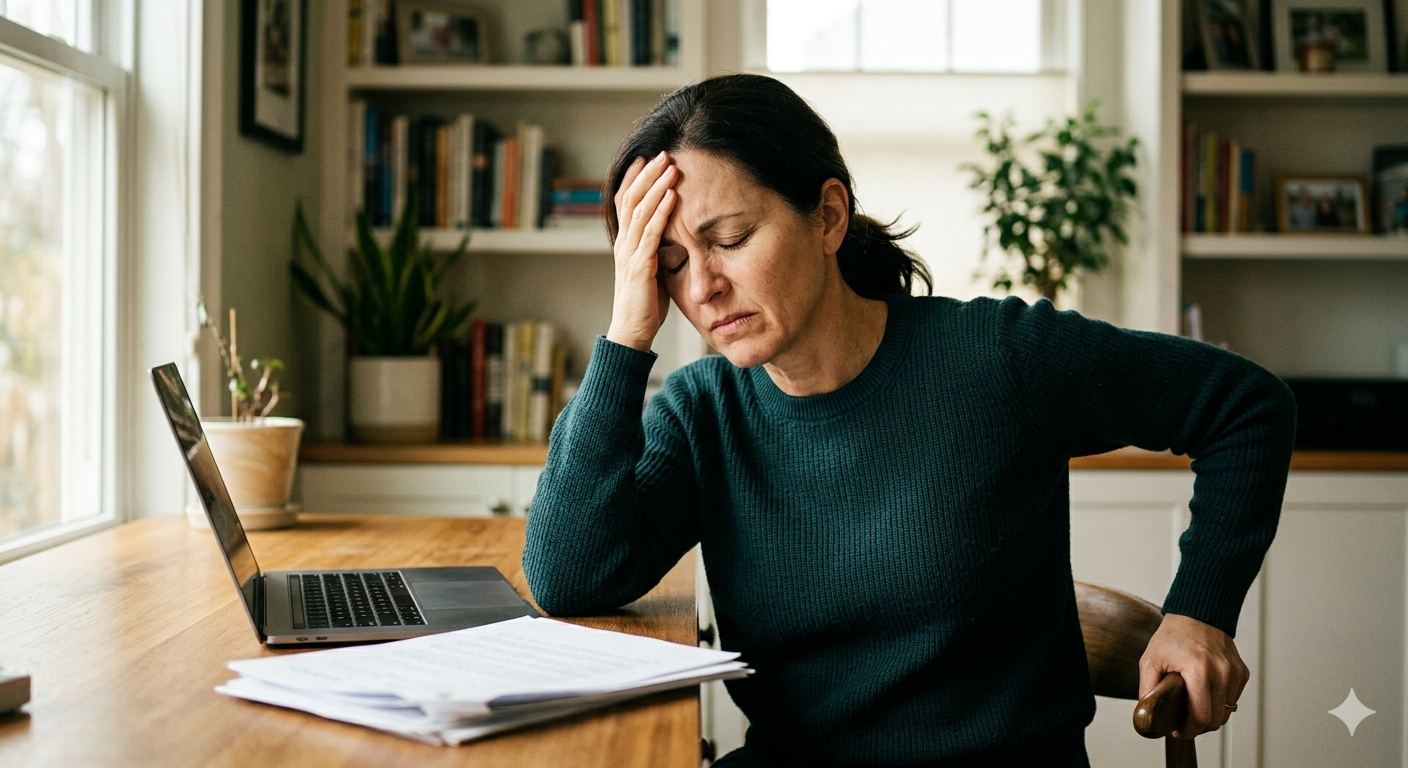
You're sitting in traffic, and someone cuts you off. Normally, you'd sigh, maybe mutter something under your breath, and move on. But today? Today you feel a white-hot surge of fury rising up from nowhere, your hands gripping the steering wheel so hard your knuckles go pale. Later, you snap at your partner over something completely trivial — dirty dishes, a misplaced remote, a question asked at the wrong moment — and even as the words are leaving your mouth, part of you is watching in disbelief, thinking, who is this person? If this sounds familiar, you're not alone, and you're not losing your mind. Perimenopause mood swings and anger are among the most common — and least talked about — symptoms women experience in their 40s, and understanding why they happen is the first step to actually doing something about them.
In this article, we're going to walk through exactly what causes perimenopause rage, why it hits some women so hard, and what you can realistically do to feel more like yourself again. No judgment, no fluff — just honest, practical information from people who work with women going through exactly this every single day.
What's Actually Happening in Your Brain and Body
Here's the thing most doctors don't take enough time to explain: the rage you're feeling isn't a personality flaw. It has a biological explanation, and it starts with estrogen.
Estrogen doesn't just regulate your menstrual cycle. It also plays a significant role in how your brain manages serotonin and dopamine — the neurotransmitters responsible for mood stability, calm, and that general sense of being okay. During perimenopause, estrogen levels don't just gradually decline in a tidy, predictable way. They fluctuate wildly. One week they're relatively high; the next they've dropped dramatically. Your brain is essentially trying to regulate mood chemistry on a moving target.
That unpredictability is what catches so many women off guard. It's not a slow fade — it's a rollercoaster.
Progesterone's Role in the Rage
Estrogen gets most of the attention, but progesterone matters here too. Progesterone has a natural calming effect on the nervous system — it actually works on the same receptors in the brain that respond to anti-anxiety medications. As progesterone declines during perimenopause, that built-in buffer against stress and irritability starts to disappear.
So you've got lower, erratic estrogen affecting your mood chemistry, and less progesterone to take the edge off. The result? Emotional volatility that can feel completely out of proportion to whatever triggered it. A broken mug becomes a catastrophe. A thoughtless comment becomes a wound. And ordinary frustration becomes that volcanic, surprising rage.
Sleep Deprivation Makes Everything Worse
Layer on top of that the fact that perimenopause often brings disrupted sleep — night sweats, waking at 3am with a racing heart, lying there unable to switch your brain off. Chronic sleep deprivation is one of the most powerful amplifiers of irritability and emotional reactivity there is. It's not weakness; it's neuroscience. When you're running on broken sleep night after night, your brain's ability to regulate emotional responses is genuinely impaired.
For many women, the anger isn't just about hormones in isolation. It's hormones plus exhaustion plus years of putting everyone else first, all colliding at once.
Why Perimenopause Rage Feels Different From Regular Anger
Most of us have experienced normal frustration and anger throughout our lives. But perimenopause mood swings and anger have a distinct quality that women describe again and again: the speed and intensity are different. There's very little warning. It doesn't build gradually the way normal anger does — it seems to arrive fully formed, overwhelming, and then often dissolves just as quickly, sometimes leaving you tearful or embarrassed in its wake.
That cycle — explosion, then deflation — is emotionally exhausting. And it can seriously affect your relationships if it goes unaddressed.
The Shame Spiral That Follows
One of the hardest parts isn't the anger itself. It's the shame that comes after. Women tell us they feel mortified by their own reactions. They worry their partner thinks they've changed permanently. They pull back from friendships because they don't want to "be difficult." They start to wonder if something is seriously wrong with them mentally or emotionally.
Here's what we want you to hear clearly: this is a recognized hormonal symptom, not a character failing. Treating it like a personal flaw — which our culture absolutely encourages women to do — keeps you stuck and suffering when there are real, effective ways to address it.
Common Triggers That Amplify Perimenopause Mood Swings and Anger
While hormones create the underlying volatility, certain factors tend to turn up the volume significantly. Recognizing your personal triggers is genuinely useful, because some of them are within your control even when the hormonal shifts aren't.
- Blood sugar crashes: Skipping meals or eating high-sugar, low-protein foods can cause blood sugar spikes and dips that dramatically worsen mood swings. Many women notice a strong connection between what they eat and how emotionally reactive they feel within hours.
- Alcohol: Even one or two drinks, which you may have tolerated easily in your 30s, can significantly disrupt sleep and destabilize mood the following day during perimenopause.
- Overstimulation and overwhelm: Noise, too many demands, not enough downtime — your nervous system has less capacity to absorb stress than it used to, and that's not imaginary.
- Unprocessed stress: If you've been white-knuckling it through a stressful period at work or at home without genuine recovery time, the emotional pressure has to go somewhere.
- Dehydration: Simple, and often overlooked. Being consistently under-hydrated has a measurable effect on mood and cognitive function.
None of this is about blaming yourself for your symptoms. It's about understanding that you have more agency than it might feel like right now.
What Actually Helps (Beyond "Just Relax")
If one more person tells you to practice deep breathing or go for a walk, you're probably ready to throw something. Those things aren't wrong, exactly — but they're not a complete answer, and they can feel dismissive when you're dealing with something this intense. So let's talk about approaches that actually address the problem at a more meaningful level.
Tracking Your Cycle and Symptoms
Even as your cycle becomes irregular, there's often a pattern to when perimenopause mood swings and anger are worst. Many women find their most volatile days cluster in the week before a period, when both estrogen and progesterone drop sharply. Keeping a simple daily log — mood, sleep, energy, any physical symptoms — for even a few weeks can reveal patterns that help you anticipate and prepare rather than just react.
This is something we've built into the resources at orozna.com's perimenopause support tools, because understanding your own hormonal patterns is genuinely one of the most empowering things you can do during this transition.
Prioritizing Protein and Blood Sugar Stability
This one sounds too simple to matter, but it's consistently one of the most effective levers women have. Eating enough protein — especially at breakfast — helps stabilize blood sugar throughout the day, which has a direct and significant effect on emotional regulation. Aim to include a protein source at every meal, and if you're prone to afternoon crashes, a protein-based snack between meals can genuinely shift how you feel.
Movement That Doesn't Feel Like Punishment
Exercise is legitimately one of the best tools for managing perimenopausal mood symptoms — but the type matters. High-intensity exercise done every day without adequate recovery can actually increase cortisol and worsen mood symptoms for some women at this life stage. Strength training two or three times a week, combined with walking and genuinely restful days, tends to work better than grinding through daily cardio.
Talking to Your Doctor About Hormonal Support
We'd be doing you a disservice if we didn't mention this directly. Hormone therapy isn't right for everyone, but it's also not the scary option it was once painted as being. For many women, low-dose hormonal support during perimenopause dramatically reduces mood instability, among other symptoms. This is a conversation worth having with a doctor who actually specializes in perimenopause — not one who brushes off your concerns or tells you this is just part of aging.
If you've been dismissed by a healthcare provider, you have every right to seek a second opinion.
How to Talk to the People Around You About What's Happening
One of the most painful aspects of perimenopause rage is how it affects your closest relationships. Partners, children, friends — they're often confused and hurt, and you're left trying to explain something you barely understand yourself.
Being honest doesn't have to mean delivering a long, formal explanation. Even something like, "I'm going through a hormonal transition right now and my emotions are harder to regulate than usual — it's not about you, and I'm working on it" can make a significant difference. Most people respond with far more compassion than we expect when we give them something real to work with.
For your own benefit too, naming what's happening takes some of its power away. Instead of carrying the shame of "I just lost it again," you have context: my brain chemistry is disrupted, I'm working with that, not against it.
When to Seek Additional Support
If perimenopause mood swings and anger are affecting your quality of life significantly — your relationships, your work, your sense of self — that's not something you should just endure. Therapy, particularly cognitive behavioral approaches that help you work with emotional reactivity, can be very effective during this time. So can joining a community of women who are going through the same thing, where you don't have to explain yourself from scratch every time.
Isolation makes everything harder. Connection — with information, with support, with women who get it — genuinely helps.
This Is a Transition, Not a Transformation Into Someone Else
We want to end here, because it matters: the anger you're feeling does not mean you have become a different, worse person. It means your body is going through one of its biggest hormonal shifts since puberty, and it's doing so while the rest of your life continues demanding everything from you.
Many women on the other side of this transition describe feeling more themselves than they have in decades — clearer on what matters, less willing to tolerate things that don't serve them, more confident. The emotional intensity of perimenopause, as disruptive as it is, is often part of a much bigger process of change that ends somewhere better than where it started.
You don't have to white-knuckle your way through the next several years. Getting informed, getting support, and making some targeted changes to how you eat, move, sleep, and manage stress can shift your experience significantly. If you want a practical, structured place to start, orozna.com has digital resources designed specifically for women in perimenopause and menopause — built to give you real tools, not generic advice. You deserve to feel like yourself again, and that's absolutely within reach.