How to Talk to Your Doctor About Perimenopause (And Be Taken Seriously)
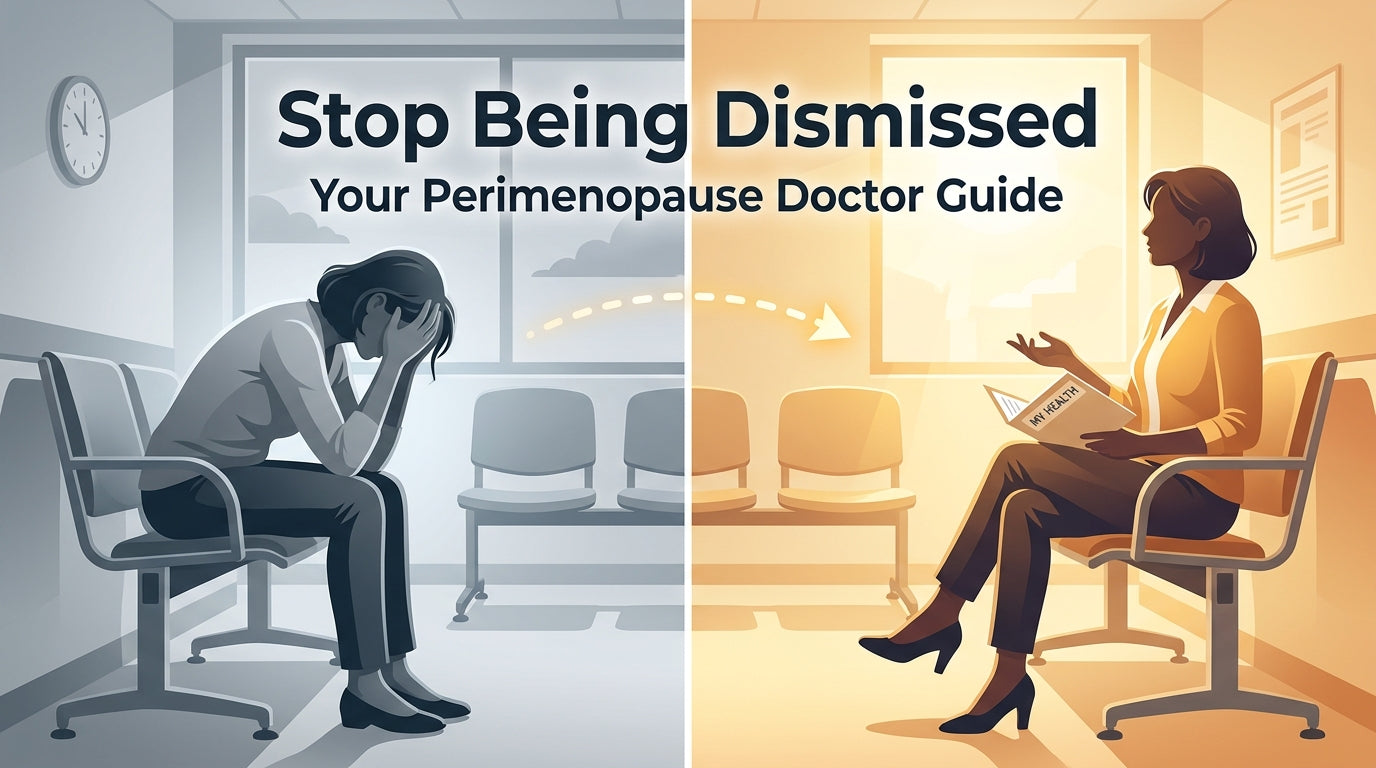
You finally get ten minutes with your doctor, you mention the night sweats and the brain fog and the fact that you haven't slept properly in four months — and they order a standard blood test, tell you your results are "normal," and send you on your way. Sound familiar? If you've been talking to your doctor about perimenopause and felt brushed off, dismissed, or like you were somehow overreacting, you are absolutely not alone. This is one of the most frustrating experiences women in their 40s describe, and it happens far more often than it should.
In this article, you'll learn exactly how to walk into that appointment prepared, how to frame your symptoms so they land differently, and how to advocate for yourself without feeling like you have to fight for basic care. Because you deserve to be heard — and there are real, practical ways to make that happen.
Why So Many Women Feel Dismissed When They Raise Perimenopause Symptoms
Here's the frustrating truth: perimenopause is genuinely under-taught in medical training. Many doctors — even well-meaning ones — aren't as fluent in the hormonal shifts of the perimenopausal transition as they are in other areas of women's health. So when you come in describing irregular periods, rage that appears out of nowhere, or a sudden inability to tolerate heat, they might reach for a thyroid test or a mental health referral before they even consider your hormones.
It's not always dismissiveness. Sometimes it's a genuine knowledge gap.
But that doesn't make it okay, and it doesn't mean you have to accept it. What it does mean is that you may need to arrive at your appointment doing some of the heavy lifting yourself — which, yes, is unfair, but it's also something you can absolutely do.
There's also the issue of how perimenopause symptoms present. They're often vague, cyclical, and hard to pin down. You might feel completely fine one week and completely unhinged the next. Doctors are trained to look for consistent, measurable problems. Hormonal fluctuation doesn't always cooperate with that model.
Track Your Symptoms Before You Walk In the Door
If there's one thing that will change the quality of your doctor conversation more than anything else, it's arriving with documented evidence. Not a vague sense that things feel "off," but actual data.
Start tracking at least two to four weeks before your appointment if you can. You don't need a fancy app — a simple notes file on your phone works. What you're looking for is patterns.
What to track
- Sleep disruptions — note the time you wake up, whether you're sweating, whether you can get back to sleep
- Mood shifts — particularly anxiety, irritability, or low mood, and whether they seem to follow a pattern in your cycle
- Cycle changes — length, heaviness, spotting, skipped periods
- Cognitive symptoms — brain fog, word-finding problems, memory lapses
- Physical symptoms — hot flashes, joint aches, headaches, heart palpitations, changes in libido
- Energy levels — when you crash, how long it lasts, whether it correlates with anything
When you sit down with your doctor and you can say "I've had night sweats on 11 of the last 18 nights, waking between 2am and 4am, and I've had two periods in the last six weeks that were significantly heavier than usual" — that's a different conversation than "I just feel really tired and emotional lately."
Specific language changes everything.
How to Frame Your Symptoms So Your Doctor Actually Listens
This might feel like you're playing a game you shouldn't have to play. And in an ideal world, you wouldn't. But until medical education around perimenopause catches up with reality, framing matters.
Lead with function, not just feeling
Doctors respond well to impact on daily functioning. Instead of "I've been feeling really anxious," try "My anxiety has become severe enough that I've had to leave work meetings early twice in the last month." Instead of "I'm not sleeping well," try "I'm averaging four to five broken hours of sleep per night and it's affecting my ability to drive safely and concentrate at work."
You're not exaggerating. You're being specific. Those are two very different things.
Use the word "perimenopause" directly
Don't wait for your doctor to bring it up. Walk in and say: "I believe I may be in perimenopause and I'd like to talk about whether my symptoms align with that." You are allowed to name what you think is happening. You are not overstepping.
If your doctor immediately jumps to ruling out thyroid issues or depression (both legitimate considerations, by the way — they can overlap), you can acknowledge that and still stay focused: "I'd be happy to test for those too. I'd also like to discuss the hormonal picture specifically."
Don't minimize yourself in the room
Watch for the habit of softening your symptoms as you describe them. "It's probably nothing but..." or "I don't know if this is related but..." or "I know I'm probably just stressed." These phrases are automatic for a lot of women — and they work against you. You've made the appointment. You have real symptoms. Describe them plainly.
What to Ask For (And What to Push Back On)
Knowing what to ask for gives you somewhere to go if the conversation stalls. Here are the kinds of requests that are reasonable and worth raising:
Ask for a hormone panel. This typically includes FSH (follicle-stimulating hormone), estradiol, and sometimes progesterone, DHEA-S, and testosterone. Worth knowing: hormone levels fluctuate wildly during perimenopause, so a single "normal" result doesn't necessarily mean your hormones aren't the issue. You can ask your doctor to test at different points in your cycle.
Ask about a referral to a menopause specialist or a gynaecologist who specialises in hormonal health. These exist, and seeing one can be a completely different experience to a standard GP appointment.
Ask about treatment options — including HRT (hormone replacement therapy), which has come a long way in terms of the research. If your doctor is resistant to discussing it, ask them to explain their reasoning specifically, rather than accepting a blanket "the risks outweigh the benefits" response without more detail.
If you feel like you're hitting a wall, it is completely within your rights to seek a second opinion. That's not being difficult. That's being your own health advocate.
Preparing for the Appointment Itself
The logistics of the actual appointment matter more than people realise. A lot of women describe feeling rushed, flustered, or like they forgot half of what they wanted to say once they were in the room. Here's how to set yourself up better.
Write a one-page summary
Before your appointment, write a brief, clear summary of your top three to five concerns, how long they've been happening, and how they're affecting your life. Bring it on paper or have it on your phone. You can hand it to your doctor or just refer to it yourself. Either way, it keeps you on track when the conversation moves quickly.
Consider bringing someone with you
This isn't about not being capable of going alone. It's about having a second set of ears, and sometimes about the subtle shift in dynamic when there's a witness in the room. A friend or partner who can help you remember what was said and support you in staying focused can make a real difference.
Book a longer appointment if you can
If your practice offers the option to book a double appointment, do it. Perimenopause is not a five-minute conversation. Give yourself enough time to actually cover what you need to cover without feeling like the clock is running out before you've got to the main point.
For women who want to go into their appointment already educated on what perimenopause actually involves — the hormonal shifts, the symptom patterns, the treatment landscape — having a resource that breaks all of that down clearly makes a real difference. The digital guides at orozna.com are built specifically for women in this stage of life, giving you the kind of grounded, practical information that helps you feel confident rather than overwhelmed before you walk through that door.
After the Appointment: What to Do If You're Still Not Being Heard
Sometimes, despite your best efforts, an appointment just doesn't go the way you needed it to. It's deflating. But it's not the end of the road.
First — write down everything that was said while it's fresh. What did your doctor recommend? What did they rule out? What were their specific reasons for not pursuing the perimenopause conversation further? This becomes useful if you see someone else.
Second, look for a doctor who has specific training or interest in menopause medicine. In many countries, there are now directories of menopause-specialist practitioners — some GPs have done additional certification in this area and approach these conversations very differently. It might take an extra step to find them, but it's often worth it.
Third, don't let a single dismissive appointment convince you that your symptoms are nothing. They're not nothing. You know your body. Perimenopause can begin as early as the late 30s and the transition can last a decade or more. Your quality of life during this time matters. You are worth pursuing this.
One more thing: being informed outside of the doctor's office is just as important as what happens inside it. Understanding what's happening in your body — why estrogen fluctuates, how that affects sleep and mood and cognition, what the research actually says about HRT and alternatives — means you're never just waiting for someone else to give you answers.
You Deserve a Doctor Who Takes This Seriously
The goal isn't to become a medical expert or to walk into your appointment with something to prove. The goal is to have a real conversation — one where you feel heard, where your symptoms are taken seriously, and where you come out with a clear plan or at least a clear next step.
That starts with preparation. Track your symptoms. Write down your concerns. Use specific, functional language. Ask directly about perimenopause. Request the tests you want. And if one doctor doesn't work out, find another one who will.
Your perimenopausal years don't have to be something you just white-knuckle through. There's real support available — medically, practically, and in terms of understanding what's actually happening in your body. If you want to feel genuinely prepared before your next appointment, explore the resources at orozna.com — they're designed by and for women who are done settling for vague answers and ready to take real ownership of this phase of their health.